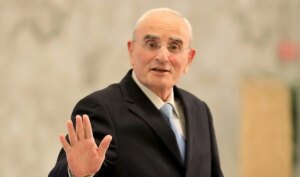
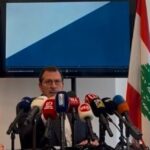
Representative Jamil Al-Sayyid launched a sharp attack on the bank restructuring law that was approved by the House of Representatives yesterday, stressing that he was and still is one of the most vocal opponents to it, and considering that the law will not save the country or deposits, but rather constitutes, as he described it, a “veiled amnesty” for those who violated the monetary and credit law, embezzled and wasted deposits, and smuggled money abroad and internally.
Al-Sayed said, in a post on the “X” platform, that many of those whom he considers to be among the causes of the collapse, according to him, contributed to writing and organizing what he described as a “fake reform law” to hide their crimes, noting that the law does not include a clause that addresses the real causes of the financial collapse, or demands that any of the officials be held accountable, or talks about recovering looted and wasted funds, nor does it assign anyone to investigate the collapse, which he said bankrupted Lebanon with more than $112 billion.
He believed that the law that was approved yesterday paves the way for seizing the remainder of people’s deposits through the financial gap law that will come later, considering that this law will divide the deposits into small installments extending between 4 and 20 years, without guarantees of continued payment.
He added that the subsequent Financial Gap Law will confiscate, as he put it, deposits that he considers “suspicious,” even though they have been systematically entered into banks for years, while most of the corruption deposits belonging, according to him, to officials and influential people, were transferred abroad after October 17, 2019.
Al-Sayyed stopped talking about the International Monetary Fund’s support for the law and the possibility of its contribution to restoring foreign confidence in Lebanon and the Lebanese people’s confidence in banks, considering that “it is all a lie,” and that restoring confidence begins with revealing the truth, holding accountable and prosecuting officials, the most senior ones before the youngest ones, and recovering the looted and wasted funds transferred abroad, especially from officials in the state, the Ministry of Finance, the Bank of Lebanon, and the banks.
He stressed that reform, in his opinion, would not be achieved through “mortgage and blackmail” of deposit holders, residents and expatriates, who trusted the reassurances of the pillars of the state and the governor of the Bank of Lebanon and the banks, noting that, until the day of the collapse on October 17, 2019, they were assuring people that “the lira is a thousand good and there is no fear for the deposits,” before, according to his accusation, they saved their wealth and smuggled it at the expense of people’s deposits.
In summing up his position, Al-Sayyed said that he is not a pessimist, but rather a realist, considering that everything that is said about financial and banking reform and the return of deposits is nothing but “a lie and a cover-up for financial crimes and their perpetrators,” and that confidence will not return to the financial sector or the lira unless accountability begins and investigations are opened.
In this context, he criticized the fate of the investigation of the “Alvarez and Marsal” company, which he said “has been dormant for years until today.” He also criticized the course of the judicial investigations with the former Governor of the Bank of Lebanon, Riad Salameh, describing them as “charades,” and considering that corruption today has become “brazen and rampant in the state and its institutions more than ever before.”
In a recent letter to the International Monetary Fund, Al-Sayyid said that Lebanon needs his advice “not his orders,” considering that many of those negotiating with the Fund today were, according to his accusation, litigants, involved, or causing corruption and collapse, or those who smuggled their deposits abroad.
He called on the IMF, if it really wants to help Lebanon and does not want to turn into “a cover and protection for the perpetrators and causes of the financial crisis,” to stipulate that investigations and accountability be opened and that the lost and looted money be recovered first.
He concluded by saying that Lebanon, if this is achieved, will not even need the Fund’s loans, considering that its wealth is present in it, especially in the ingenuity of its citizens, their competence, and their belonging to their country, residents and expatriates, warning the IMF that if it does not do that, “you are complicit and partners from where you know it and do not know it.”
Later, Al-Sayed published a second post in which he said: A clarification to some commentators: In my opinion, when a diverse sectarian parliamentary majority votes to pardon army killers, there is no longer a moral justification for detaining any other prisoner, regardless of his crime, and therefore my vote came against this law, adding this principle…”
Seal: In the Constitution, no law becomes effective except after the signature of the President of the Republic.”