November 9, 2026

Major General
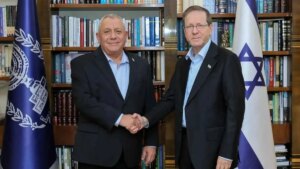
With Israeli President Isaac Herzog’s assignment of the leader of the Yashar Party, Gadi Eisenkot, to form the new Israeli government, questions began to be raised about how this violent military man would deal with the Lebanese situation in general and the situation in the south in particular, and whether he would continue to adopt the issue of “prior deterrence” and the continuation of various military attacks and operations, or whether he would change the “Dahiya Doctrine” that he invented and the enemy’s methods in dealing with the southern situation.? This is if he is able to form the government within the 24 days specified in the constitution, which can be extended for 14 days, amid Herzog’s continued desire to form a “national unity government” with Netanyahu and other parties from the right and others in the event that Eisenkot fails to form the government within the specified deadline.
According to available data from more than one local and external source, Eisenkot’s plans and vision for dealing with Lebanon and the south were taking shape in several basic axes, most notably: the “suburb doctrine” and systematic destruction, which he approved during his assumption of command of the northern region in the Israeli army. This doctrine is based on: using excessive and disproportionate force in the event of a confrontation or shooting from any Lebanese village or region. Considering civilian infrastructure and villages that are used as resistance bases as legitimate military targets, which means imposing widespread destruction to quickly paralyze the opponent’s deterrent capabilities. Lebanon News
Will he continue to adopt this doctrine or does he have other plans to deal with the southern situation?
Data indicate that Eisenkot is adopting political arrangements and conditional withdrawal in accordance with the vision of “conflict management.” On the political and diplomatic level, Eisenkot is described as leaning more towards solutions sponsored by the current American administration and other countries to stop the fighting, but only when Israel achieves its strategic goals, in order to relieve pressure on the home front and the Israeli economy. Diplomatic reports and estimates also indicate that Eisenkot may prefer to accelerate the paths of security arrangements or framework agreements with Lebanon under international sponsorship to arrange the status of southern Lebanon, in exchange for security guarantees for Israel, and indications are being put forward about the possibility of entering into negotiations to arrange withdrawals from some Lebanese border areas adjacent to the occupying entity, provided that it is guaranteed that the military structure of the resistance does not return to the direct border strip. Lebanon News
In this context, Channel 14 reported yesterday that Eisenkot was planning to withdraw from Lebanon even before he succeeded in forming a government, and had begun making negotiations and arrangements planning what is known as “the next day” on the northern front.
However, in exchange for this, Eisenkot adopts adherence to the “absolute freedom of military movement and military action” adopted by his predecessor, Netanyahu, even in the event of reaching settlements or tactical withdrawals. Therefore, Eisenkot rejects any agreements that restrict the ability of the Israeli occupation army to direct pre-emptive strikes or continue intelligence and air operations inside Lebanese territory and Syria whenever the security need arises. He believes that the maintenance of “security zones” or the ability to intervene directly is the only guarantee to prevent the growth of the opponent’s power on the northern border.
But the question is also: How will Lebanon deal with Eisenkot assuming the presidency of the government?
Lebanon views Eisenkot’s formation of the government with great caution and political and security realism. But he is not seen as a potential “peacemaker” or tension-busting figure, but rather as a professional and pragmatic military general known for his measured bloodshed. At the official, political and popular levels in Lebanon, there is no bet on a fundamental change in Israeli policy. The official and political circles in Lebanon realize that the Israeli security doctrine towards the northern front is fixed and does not change with the change of people. Whether it is Prime Minister Netanyahu or Eisenkot, Israel’s strategic goal remains to eliminate any threat on its northern border. However, estimates tend to focus on diplomacy and full adherence to implementing international resolutions (most notably Resolution 1701) and betting on international and diplomatic pressure (American, French, and the United Nations) to restrict any escalatory intentions that Eisenkot may try to translate militarily to restore the deterrence of the Israeli army.
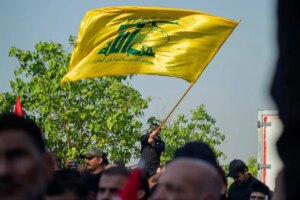
As for Hezbollah and its allies, they will deal with Eisenkot as an experienced military man and a former member of the war council that directed operations against Lebanon and Gaza. He is therefore not an amateur political figure, but rather a “military decision maker” who knows the details of the geography of southern Lebanon and Hezbollah’s capabilities well. The resistance does not see Eisenkot’s appointment as an opportunity for a real breakthrough, but rather deals with him with the logic of high field readiness, considering that his threats to implement the “suburb doctrine” and mass destruction always place the southern front on the highest level of alert, regardless of the political slogan or promises he makes to alleviate Israeli internal crises.