November 7, 2026

Public secondary education teachers in Lebanon continue their commitment to the open strike that they announced on November 4, in protest against the decision of the Minister of Education and Higher Education, Rima Karami, to merge classes and classes.
The Association of Public Secondary Education Teachers explains that the merger decision will lead to overcrowding of students in classrooms, depriving contract teachers of their teaching hours, as well as assigning principals to teaching tasks, within an educational plan that the association described as “random and inapplicable.”
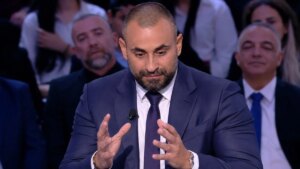
In this context, the head of the association, Jamal Omar, confirmed in a statement to “Lebanon Debate” that the association is awaiting a call from Minister Karami to determine its final position on the demand to cancel the merger decision. He pointed out that the association’s administrative body will hold a meeting immediately upon receiving the ministerial response to determine the next step, either by ending the strike or continuing it based on the content of the answer.
Omar warned of the consequences of the continuation of the crisis, pointing out that the ministry’s intransigence may prevent public high school students from continuing their education for an additional week. He explained that the strike led to the paralysis of teaching in about 270 public secondary schools, in addition to previous decisions by the Minister to merge and cancel six other secondary schools.
The president of the association indicated that about 60,000 high school students are out of their seats, threatening the regularity of the entire academic year, especially for students with official certificates. He warned of the exacerbation of the crisis of educational inequality, in light of the regularity of studies in private schools, while the public sector was disrupted as a result of decisions he described as “unconsidered.”
Omar pointed out that the Parliamentary Education Committee had recommended to the minister against the merger decision, but this recommendation has not received any response so far.
With the Ministry of Education adhering to its decision and the Association insisting on its position, the fate of thousands of students remains pending, amid growing fears that the crisis will turn into a deeper conflict that will strike the structure of public education and widen the gap in favor of the private sector amid accusations that ministerial policies are weakening the public school.