November 3, 2026

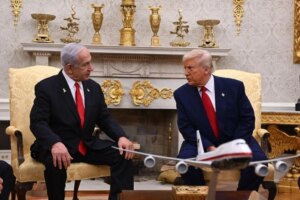
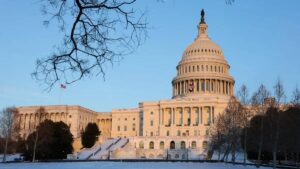
Political circles in Israel fear the repercussions of the midterm elections for the US Congress scheduled for November 3, going beyond the possibility of the Republican Party losing its legislative power to a more complex scenario represented by President Donald Trump’s freedom from internal restrictions and his tendency towards imposing external settlements that may put unprecedented pressure on Tel Aviv.
In this context, Gadi Ezra, a writer for the newspaper “Yedioth Ahronoth” and a former official in the Prime Minister’s Office and the Israeli Ministry of Foreign Affairs, pointed out that “the last line of defense for Israel is on the verge of collapse,” stressing that the results of this entitlement will have direct repercussions on national security, trade relations, and the continuity of the strategic alliance with Washington, at a time when Israel is facing a local political crisis that followed the Knesset elections.
Ezra explained that Trump is running in these elections amid a noticeable decline in his internal popularity, pointing to an NBC poll that showed the rate of dissatisfaction with his performance reaching a record level of 60%, in addition to similar negative indicators monitored by Fox News. Current data suggest that the Democratic Party will achieve broad gains that will give it control over both chambers of Congress, which coincides with the decline in support for Israel within the Democratic Party.
The writer relied on a Pew Research Center study conducted in July 2026, showing a decline in the percentage of Democrats who hold positive attitudes toward Israel from 57% to 43% within seven years, compared to an increase in those sympathetic to the Palestinians from 58% to 67%. He also pointed to a remarkable shift in the legislative institution, represented by the vote of 40 Democratic members of the Senate out of 47 last April in favor of halting arms sales to Israel, compared to 27 members the previous year. These are projects that, although the Republican majority prevented their approval, the transfer of leadership to the Democrats threatens to pass them in light of growing criticism of Israeli policies in the West Bank.
Israeli concerns are not limited to the balance of legislative power, but rather extend to Trump’s possible behavior in the last two years of his term if he loses the majority in Congress. Ezra believes that the faltering of the president’s domestic agenda may push him to intensify his focus on foreign policy files in search of an achievement that will immortalize his political legacy, even if that is at the expense of Israeli interests. This is represented by historical precedents that include former Republican President George W. Bush after his loss of Congress in 2006 and his sponsorship of the Annapolis conference in 2007, and former Democratic President Barack Obama, who, after his party’s loss in 2014, moved towards signing the nuclear agreement with Iran in 2007. 2015, in addition to Trump himself, who promoted the “deal of the century” after the Republicans lost the House of Representatives in 2018.
The writer warns that Trump’s decline in influence internally may accelerate his foreign movements, amid open negotiations conducted by Washington with Iran, and the Gaza Strip remaining under the control of the Hamas movement, which may put any prospective Israeli government in the grip of dual pressures coming from a Congress controlled by Democrats and a White House seeking quick results.
In the long term, indicators of the current elections herald fundamental transformations that go beyond Trump’s current term and affect the future of the entire American-Israeli relationship, as the primaries within the two parties have turned into a stern test of the candidates’ positions toward Israel. With the 2028 presidential elections approaching, the biggest challenge arises: reviving the lost partisan consensus on Tel Aviv. Israel finds itself facing a very sensitive stage in which the nature of the historical alliance with Washington changes, regardless of Trump remaining in power.