October 31, 2026

The circle of potential risks for any anticipated regional confrontation between Iran, on the one hand, and the United States and Israel, on the other, has expanded, following Tehran’s inclusion of the region’s artificial intelligence infrastructure within the bank of its retaliatory goals. This development comes in conjunction with accelerated American and Israeli military movements aimed at keeping options open for the American administration to carry out new strikes.
In this context, CNN quoted a senior Iranian security official as saying that Tehran has included artificial intelligence infrastructure among potential targets for response if it is exposed to any American or Israeli attack. The official warned that targeting this structure would have global repercussions that go beyond the energy crisis and the Strait of Hormuz, stressing that renewed confrontation would lead to a long-term “war of surprises,” during which Iran would not adhere to a predictable pattern of behavior.
On the other hand, Fox News reported, citing official and military sources, that American forces in the Middle East are conducting repositioning operations to ensure military readiness in the event that US President Donald Trump issues a decision to resume the strikes, noting that there are no indications yet that a final decision to attack has been taken.
In parallel, American reports indicated Israeli preparations for a new wave of attacks. Israeli Prime Minister Benjamin Netanyahu is pushing to target additional sites inside Iran, including facilities in the energy sector that were not targeted in previous rounds.
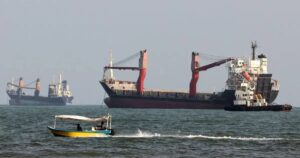
In the field context, the Wall Street Journal revealed that Washington is working to enhance its military deployment in the region, in conjunction with Trump considering launching a new round of attacks to pressure Tehran and push it towards making concessions. In this context, the US Navy extended the deployment period of a number of its ships and destroyers to protect navigation and enforce the naval blockade.
The size of the current US military presence is estimated at about 50,000 soldiers and 20 warships, with an operational cost ranging between two and three billion dollars per month, in light of the continuing disputes over the Iranian nuclear program and the security of navigation in the Strait of Hormuz, after months of confrontations and military and economic pressures.
As American reinforcements and Iranian threats continue, the coming confrontation – if it breaks out – threatens to go beyond the framework of traditional wars, so that the entry of technological infrastructure and artificial intelligence will constitute an unprecedented shift in the regional deterrence equation.