October 30, 2026

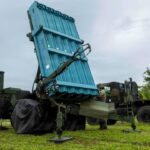
Australia is considering adopting “Tamir” interceptor missiles, used in the Israeli “Iron Dome” system, as part of its tireless efforts to build the country’s first land-based ballistic missile shield.
In this context, the Australian Department of Defense contacted Washington to inquire about the cost and delivery schedule, especially with regard to the US Marine Corps’ medium-range interception capability, which relies on the “SkyHunter” system, which is the American-made version of the “Tamir” missiles. Canberra is also studying the “Patriot” and “Aegis” systems, and is expected to receive additional offers from the Norwegian “Kongsberg” and the South Korean “Hanwha” companies.
Australia is seeking to possess a medium-range missile defense system, in response to what Defense Minister Richard Marles described as “the most complex and threatening strategic circumstances since World War II.” According to The Australian newspaper, the Ministry of Defense issued a tender in mid-October requiring the availability of a ready-to-use and proven system; The system will be selected by the end of 2027, and a live launch test will be conducted during the “Talisman Saber” maneuvers in 2029, while it is unlikely that the system will enter full operational service before the mid-2030s.
This step comes amid strong criticism directed by Australia against Israel against the backdrop of the Gaza War, as Canberra refuses to supply Israel with weapons, which makes the purchase of Israeli defense products a subject of local political controversy. In this regard, Prime Minister Anthony Albanese stressed that his country “does not sell weapons to Israel,” while Defense Industry Minister Pat Conroy defended the use of Israeli military systems, saying: “We make no apologies for seeking the best possible equipment for the Australian Defense Forces,” which was supported by Environment Minister Murray Watt, stressing that the government will always strive to provide the most appropriate military technology.
In terms of technical capabilities, Iron Dome was originally designed to intercept short-range missiles, but over the past five decades it has become an essential pillar of Israel’s multi-layered air defense network. Its modular structure allows it to be integrated with other systems, such as operating independently or within a wide network that includes the “Hetz” systems (the Arrow in its second and third versions) to intercept ballistic missiles outside the atmosphere, and the “David’s Sling” system designated for tactical, medium, long-range, and cruise ballistic missiles (between 40 and 300 kilometers).
“Iron Dome” actively participated in protecting the Israeli home front through numerous military stations and operations, such as “Protective Edge,” “Guardian of the Walls,” “True Dawn,” “Shield and Arrow,” and “Iron Swords,” all the way to Operations “Rising Lion” and “Roar.” Over time, the system has undergone successive technical updates, including software and radars to increase its ability to track multiple targets, algorithms to improve accuracy, as well as the development of interceptor missiles to deal with longer distances and complex engagement conditions.
However, Israeli officials acknowledge that Iron Dome is not absolutely impregnable and does not guarantee 100 percent protection, which highlights the importance of complementary measures such as sirens and fortified shelters, even though its high interception rates contributed significantly to reducing human and material losses.