October 26, 2026

Hajj Hassan’s rhetoric escalated against Washington and Tel Aviv…accusations of the authority of “abandoning sovereignty” and blatant American interference in judicial and political decisions.
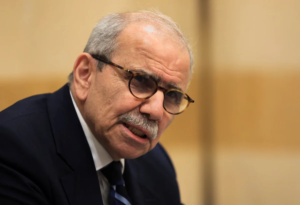
The head of the Baalbek-Hermel parliamentary bloc, MP Hussein Haj Hassan, directed sharp criticism at the United States and Israel, accusing them of doubling the pressure on Lebanon, and considering that the Lebanese authority’s response to these pressures constitutes a violation of national sovereignty and the independence of political decision-making. This comes in light of a growing internal division over the management of security and judicial files and the nature of the relationship with Washington.
Hajj Hassan’s statements came during a political meeting organized by the party’s public relations in the town of Labweh in the northern Bekaa, in the presence of a crowd of officials, activists and townspeople. In his response to the accusations directed at the “party” of aggravating the situation and raising the ceiling on political discourse, he held the United States and Israel fully responsible, in addition to the Lebanese authority, which he accused of fueling the escalation by submitting to external pressures.
The representative stressed the party’s keenness to achieve stability and extricate the country from its crises, on the condition that national sovereignty and free decision-making are preserved, independent of any foreign dependency or guardianship.
In a related context, Hajj Hassan directly accused the US Embassy of blatant interference in Lebanese political affairs, revealing efforts led by the embassy to amend local legislation, including pressure on representatives to repeal the boycott of Israel law, which he described as “occupying the political decision” beyond the limits of traditional guardianship.
Hajj Hassan also criticized American interventions in the judicial process, referring to the explosives truck incident in Dahr al-Baydar, and the report submitted against the Lebanese ambassador to Washington. He considered that Washington’s classification of what is acceptable or unacceptable in these files constitutes blatant interference in the work of the Lebanese judiciary, warning of the repercussions of this on undermining the independence of the judiciary and turning it into a tool for implementing foreign agendas.
Haj Hassan stressed that the “party’s” positions are based on the principles of sovereignty, freedom, and national dignity, considering that American pressures serve exclusively Israeli interests, and what is presented under the title of “American interests” is nothing but a reflection of Israeli priorities in the region.
He concluded by warning the Lebanese authority against the consequences of responding to American dictates, as this represents an imminent danger to stability, national cohesion, and the elements of Lebanese power, calling on those concerned to realize the dangerous repercussions of this path.
These positions coincide with the intensification of internal debates about the concept of sovereignty and the limits of external intervention, amid sharp political tensions regarding the nature of the relationship with Washington and Tel Aviv, and the role of constitutional and judicial institutions in dealing with sensitive files.