October 24, 2026

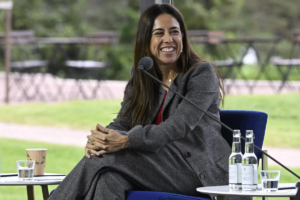
Minister of Social Affairs, Haneen Al-Sayyed, carried the file of the city of Tripoli to the Elysee Palace in the French capital, Paris, where she presented an integrated vision aimed at revitalizing the city economically and socially, by linking its cultural and historical heritage with major infrastructure projects and job and investment opportunities.
This came during Minister Al-Sayed’s participation in the launch of the “Alliance for Culture, Dialogue and Development,” which is a joint initiative between France and Qatar, in the presence of the French Minister Delegate in charge of Francophonie, international partnerships and affairs of the French abroad, Eleonore Carois, along with international figures and representatives of cultural and development institutions. The meeting concluded with a speech by French President Emmanuel Macron.
During the session devoted to Lebanon, Al-Sayed reviewed the urban renewal project for the city of Tripoli, presenting an approach based on transforming the cultural and historical richness of the city into a fundamental driver of economic and social development and job creation.
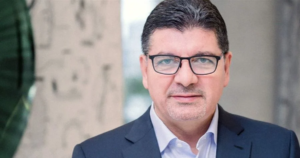
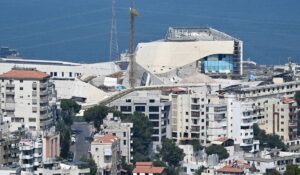
She highlighted the major development projects launched by Prime Minister Nawaf Salam to enhance Tripoli’s economic position and its regional role. At the forefront of which is the development of the port of Tripoli and the special economic zone adjacent to it, the opening of Rene Mouawad Airport in Qlayaat, the rehabilitation of the railway line linking Tripoli and the Syrian border, in addition to the revival of the Rashid Karami International Fair. She stressed that these projects constitute an integrated network to enhance trade, investment and transport, and reactivate the role of Tripoli as a major gateway between the Mediterranean and the Arab Levant.
In the same context, Al-Sayed presented the ten-year cooperation framework between Lebanon and Qatar Museums to develop Tripoli, stressing its complementarity with major projects by protecting heritage, rehabilitating the urban fabric, and supporting crafts and creative industries, linking economic development to improving the quality of life of the city’s people.
She explained that “preserving historical buildings and markets is not enough unless it is accompanied by revitalizing the local economy, supporting artisans, qualifying youth and women, and improving public spaces and services.” In this context, it discussed the proposed pilot projects in Al-Tall Square and Khan Al-Askar, as well as the (HIRAF) initiative led by the Ministry of Social Affairs with the aim of providing vocational training, production spaces, and facilitating access to markets for artisans, especially women and youth.
Al-Sayed concluded by emphasizing that the vision proposed for Tripoli goes beyond restoring the stone to revitalizing the city socially and economically, and linking its heritage to job opportunities, investment and local development, stressing the importance of international partnerships in supporting this path in a way that responds to the priorities of the city and its people, and places the files of the port, Qlayaat, the railway, and the Rashid Karami Gallery, in addition to programs for protecting heritage and supporting crafts, within a single development path aimed at restoring Tripoli’s economic and regional role.