October 24, 2026

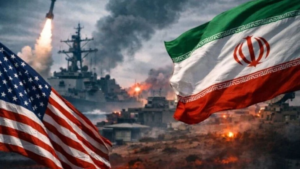
The United States of America raised the level of security alert in its diplomatic missions in the Middle East, and began reducing the number of its employees in a number of embassies and consulates, against the backdrop of intelligence reports indicating that Iran has reached advanced stages of planning to target American citizens and officials inside and outside the region.
The New York Times reported, citing American officials, that these increasing threats prompted the State Department to take a package of precautionary measures, which included issuing orders for the departure of non-essential employees and their family members from Saudi Arabia, as well as the reallocation of workers to other diplomatic missions. The same source confirmed that the level of threat facing American interests is the highest since the outbreak of confrontations with Iran last February, amid serious fears of potential attacks spreading to include European countries and American territory itself.
In a related context, on Friday, Director of National Intelligence, Jay Clayton, sent an official memorandum to Secretary of State, Marco Rubio, in which he warned that Tehran had “significantly intensified” its efforts to target American citizens. The memorandum indicated that plans to carry out deadly attacks have reached “advanced stages” in the Middle East and other capitals, and these are developments that President Donald Trump and his senior aides have been informed of, who receive periodic reports about them.
During the past three weeks, American intelligence analysts have intensified their review of information related to possible plans targeting diplomats and ambassadors, as officials indicated the possibility of the presence of cells linked to Iran inside the United States, as well as monitoring potential targets on the European continent. On the other hand, another American official called for not overestimating Tehran’s operational capabilities outside its borders, suggesting that its Iranian ambitions are greater than its actual capabilities on the ground.
In response to these facts, the Ministry of Foreign Affairs imposed a “restricted operation” system on a number of missions in the region, allowing the number of employees to be reduced and redistributed. The officials explained that these measures are closely related to recent intelligence information, in addition to mounting fears of possible attacks that may be carried out by the Houthi group in Yemen against American interests.
These security developments coincide with continued coordination and military tension with Tehran, and information about Washington and Tel Aviv studying new military options against Iran without making a final decision regarding them. As part of pre-emptive measures, in early October last year, the US Army withdrew its twelve B-1 strategic bombers from Fairford Air Base in southern England, after receiving warnings about possible Iranian threats targeting the base.
Thus, the American administration finds itself facing a complex security challenge that goes beyond the limits of securing diplomatic missions in the Middle East, to include confronting risks extending to Europe and the American interior, at a time when options for military escalation with Tehran remain on the table.