October 24, 2026

The United States of America has begun reducing the number of its diplomatic staff in four countries in the Middle East, including Lebanon, in a move that reflects escalating security concerns about the expanding scope of the confrontation with Tehran. This decision comes after receiving intelligence information indicating that Iran has intensified its efforts to target American citizens and employees, and that some of these plans are in advanced stages of implementation.
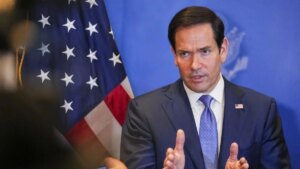
According to a report prepared by journalist Matthew Lee for the Associated Press, the US State Department based its measures on a secret intelligence memorandum submitted on Friday to the Secretary of State and National Security Advisor Marco Rubio. The memo was prepared by Director of National Intelligence Jay Clayton, warning of the growing Iranian threats and those linked to the Houthi group in Yemen, which target American interests and workers in the region.
Three American officials – who preferred to remain anonymous – confirmed the authenticity of this memo, which was previously circulated by the Axios website. Although official US State Department statements publicly focused on Houthi threats, officials stressed that the risks associated with Iran stand behind these new measures.
In the details of the procedures, the four embassies are essentially subject to the “restricted operations” system that limits the size of their crews, and they will continue their duties despite the additional reduction. These measures differ from those imposed in the Kingdom of Saudi Arabia, where, on Wednesday, Washington issued an order for the departure of non-essential employees and their families, while no mandatory evacuation orders were imposed in Lebanon, Jordan, Qatar and the UAE. These developments coincide with renewed confrontations between the Saudi-led coalition and the Houthis, following missile and drone attacks launched by the Houthis on Saudi territory.
On the other hand, American officials categorically denied any connection between reducing diplomatic missions and preparing to carry out American or Israeli military strikes against Iran. However, US President Donald Trump reignited the tone of escalation during an election rally in Florida on Friday, when he praised the previous “Epic Fury” military operation against Iran, hinting at the possibility of carrying out a similar operation or reaching a new agreement if Tehran showed flexibility.
These moves come amid strenuous efforts by mediators to bring Washington and Tehran back to the official negotiating table, especially with the conflict reaching a state of stalemate and its increasing economic repercussions within the United States. The war has resulted in higher energy costs, which has increased political pressure on President Trump and the Republican Party ahead of the midterm congressional elections scheduled for November 3, in which Republicans are seeking to maintain their majority.
On a parallel level, Iranian state television announced that the Revolutionary Guard Navy renewed its threats to target US military bases in the region if Washington continues to secure and direct commercial ships through the vital Strait of Hormuz. In the same context, Iranian Foreign Minister Abbas Araqchi warned, in an article in the Financial Times, that any additional escalation in the Strait or throughout the region would threaten the lives of civilians, the stability of the region, and the entire global economy.
Thus, the inclusion of Lebanon among the countries covered by American security measures acquires extremely sensitive dimensions, as it coincides with the intersection of intelligence warnings about plans targeting American citizens, and mutual military threats, at a time when fears are increasing about the expansion of the regional confrontation.