October 16, 2026

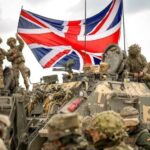
The British Army, for the first time in years, re-implemented large-scale military maneuvers in the Falkland Islands simulating the scenario of regaining control over them from supposed Argentine forces, coinciding with escalating political tensions and statements by Argentine President Javier Milley regarding sovereignty over the archipelago.
According to a report published by the British newspaper “The Times” and reported by the Israeli “Channel 12” from journalist Assaf Rosenzweig, about 250 personnel participated in the training that was conducted last October and lasted for 6 days; They included 150 British soldiers from B Company, 2nd Parachute Battalion, and 100 members of the Islands’ Local Defense Force. The maneuvers, codenamed “Cape Upholder,” were based on the military operations of the 1982 Falklands War, specifically Operation Sutton.
The training began with a platoon of paratroopers sailing along the coast of East Falkland on board the patrol ship HMS Medway, before the soldiers were disembarked by inflatable boats in the San Carlos area, which has historical symbolism from the 1982 war. This was followed by a grueling 32-kilometre night march towards Goose Green, where the forces carried out an attack with the support of the Royal Air Force’s Typhoon fighters, and within three hours they were able to neutralize the forces of the virtual enemy. In a communications complex.
In later stages, the soldiers and their equipment were transported by air to continue the tactical advance for a distance of 21 kilometers towards the strategic “Wairless” height near the islands’ capital, Port Stanley. There, the troops engaged in short-range combat in rocky, swampy terrain characterized by difficult weather and winds, before achieving control of the objective. Despite the field nature of the training, a British security official explained that it was planned in advance and was not a direct response to the recent statements of the Argentine president.
These maneuvers come in the wake of a political escalation represented by Argentine President Javier Milley’s warnings last month that his country might “move quickly” to reclaim the islands, which he described as being under “illegal foreign occupation,” hinting to the United Nations General Assembly that Buenos Aires might “take matters into its own hands,” despite his indication of his preference for peaceful means. On the other hand, British Prime Minister Andy Burnham stressed his government’s commitment to doing “whatever it takes” for the islands to remain British territory in response to the desire of their residents.
The tension is not limited to the military and political dimensions, but has extended to include a dispute over the huge “Sea Lion” oil project off the coast of the islands. In this context, The Guardian newspaper revealed that British authorities went to Interpol’s headquarters in France with a request to reject Argentine arrest warrants against participants in the project, including British citizens, considering the Argentine moves to be politically motivated and aimed at deterring economic activities on the islands.