October 16, 2026

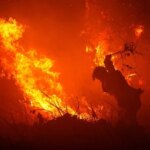
Indonesia is facing one of the harshest and most destructive waves of fires in recent years, after flames swept across large areas on the Muslim-majority island of Sumatra. Which resulted in the destruction of about 300 homes and prompted nearly a thousand people to flee to shelter centers, in light of growing fears of an environmental catastrophe affecting wildlife, and amid harsh climatic conditions linked to the “El Niño” phenomenon.
According to a report published by the British newspaper “The Guardian” and reported by the Israeli “Channel 12” website, the forest fires caused massive property damage, and hundreds of residents were forced to evacuate urgently amid the thick smoke. An informed source was quoted as saying that residents noticed the approaching fire on Saturday and tried to extinguish it themselves with portable pumps, believing that the situation was under control, but the ember remaining burning in conjunction with the change in wind directions led to the fire moving at tremendous speed towards the town.
Lenny, 55 years old and currently residing in a shelter, recounted the extent of the tragedy, saying: “My house no longer exists. There is nothing left. I was only able to save myself and take my children with me, and I did not have time to carry anything.” Official Indonesian data confirm that about 1,000 people fled as a result of this disaster.
The losses are not limited to human structure and property, as the fire poses a serious threat to wildlife, with the number of animal casualties likely to be huge. This danger represents a direct threat to orangutans, whose few remaining natural habitats are Indonesian forests. Last August alone, 46 orangutans were rescued after facing extreme danger.
The International Union for Conservation of Nature explained that fires previously destroyed 52% of the orangutan population on the island of Borneo, noting that the biggest challenge will extend beyond controlling the fires, in light of the difficulty of providing alternative habitats and sufficient water and prey resources for these animals.
Indonesia is classified among the countries most affected by drought, heat waves, and fires associated with the “El Niño” phenomenon, as the Indonesian government confirmed that the current conditions are the worst the country has witnessed in an entire decade.
It is noteworthy that the American authorities had officially announced last June the beginning of the “El Niño” climate phenomenon, which causes a sharp rise in sea surface temperatures and widespread climate changes globally, amid warnings issued by researchers and climate organizations last summer that the phenomenon would reach unprecedented record levels.