October 12, 2026

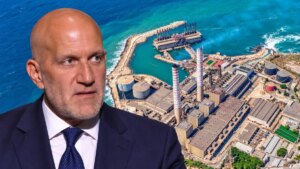
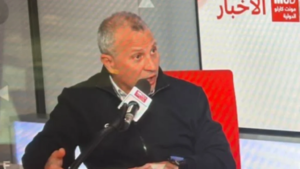
The seizure of the truck in the Dahr al-Baydar area sparked a widespread political debate about the nature of the investigations into the explosive materials it was carrying, and the government’s position on weapons outside the framework of legality. In this context, Representative Ibrahim Al-Moussawi responded to the official and political positions related to the regime, especially the position of Prime Minister Nawaf Salam, defending the right of the resistance to defend Lebanon.
In his statement following the meeting of the Media and Communications Committee, Al-Moussawi addressed the criticism directed by one of the representatives to the work of the Parliament and the committee’s recommendation. He explained that the objecting representative “attended intermittent sessions and did not see the full picture,” basing his position on fragmentary data. He stressed that the recommendation put forward by Representatives Paula Yacoubian and Yassin Yassin was subject to discussion and voting and was approved by an almost unanimous majority, noting that the MP’s objection later turned to target the Chairman of the Committee with accusations related to refusal to partner with the private sector.
Regarding economic and communications matters, Al-Moussawi denied his opposition to the private sector, stressing that he is one of the advocates of partnership between the public and private sectors because of the investment and development it provides. However, he explained that his objection is to re-approving management and operating contracts according to the old model in the cellular sector, calling for reforming governance in accordance with the recommendations of the International Monetary Fund first, and waiting for the parliamentary investigation committee to finish its work, to raise the value of the two companies and strengthen the state’s position before introducing a strategic partner. He likened the matter to a damaged car whose value decreases when sold, while repairing it in advance allows for a better price and a greater return for the treasury.
As for the file of the seized truck in Dahr al-Baydar, Al-Moussawi stressed that “the resistance is not ashamed or ashamed, and is performing its duty in front of everyone and in the presence of witnesses” if the reports about its subordination to it are true. He stressed that self-defense is a natural right that the resistance derives from the United Nations Charter and human rights conventions, as long as the Israeli attacks continue and the Israeli forces remain in Lebanese territory, and the inability of the government and the army to confront them as a result of the absence of armament and political decision-making.
Al-Moussawi rejected the threats and insinuations linking the resistance to assassinations or internal conflicts, stressing that its history is bright and honorable, and that it realizes that Lebanon’s strength lies in its immunity, internal unity, and preventing a slide into strife. He criticized previous agreements concluded by the state, considering that they did not prevent attacks and destruction, and described the trend towards launching internal accusations in light of the continued aggression as “shameful and shameful against the state and the government.”
Al-Moussawi concluded by calling on the state to draw lessons from the experiences of the region, pointing to what is happening in the West Bank and Syria, and considering that the resistance is exercising a legitimate national and international right. He called on the authority to review its accounts, strengthen national unity, and abandon accusations that he said “will not repel Israeli aggression, will not preserve national unity, and will not increase immunity.”