Regional diplomacy is witnessing a Gulf division over the Iranian crisis. While Qatar and Oman are leading efforts to reopen negotiation channels between Washington and Tehran with the aim of ending the war, Saudi Arabia and the UAE are adopting an opposing position, represented by pressuring the administration of US President Donald Trump to maintain the naval blockade and economic sanctions and not make any concessions to Iran.
According to a report published by journalist Eli Leon in the Israeli newspaper “Maariv”, citing the “Wall Street Journal”, mediators – including Qatar – are seeking to push the two parties towards a new round of talks in Oman that may begin next week, with the aim of reopening the Strait of Hormuz and launching a path to reduce the escalation. This movement comes at a time when US President Trump hinted this week at his expectations of holding a meeting soon between the two sides, despite the continuing wide gaps between Washington and Tehran regarding the conditions for ending the conflict.
On the other hand, Riyadh and Abu Dhabi changed their previous approach, which supported diplomatic solutions, driven by escalating security concerns as a result of repeated Iranian attacks on ships, in parallel with Houthi operations in Yemen that threaten alternative navigation routes in the Red Sea. The report stated that Saudi Crown Prince Mohammed bin Salman informed American officials of the necessity of continuing the naval blockade until Iran is forced to sign a new, more stringent agreement on better Western terms. In the same context, Emirati enthusiasm for any quick settlement has declined, amid the conviction that the escalation proves Tehran’s lack of urgency for peace and its rejection of any permanent Iranian control over the Strait of Hormuz.
Meanwhile, there are indications of Iranian readiness to reopen the Strait within a short period, provided that the United States eases military pressure and lifts the blockade on Iranian ports, making these two issues the focus of ongoing communications. On the internal level in Iran, the report indicates the presence of deep divisions. “Moderate” diplomats acknowledge the extent of the economic crisis, proposing formulas for a truce in exchange for lifting the siege, while the Revolutionary Guard adopts a hard-line stance prepared for a long war, demanding a return to understandings that allow the export of oil, the release of frozen assets, and the recognition of Tehran’s influence in the Strait of Hormuz.
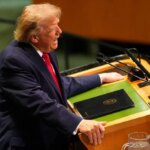
As for the White House, there is a feeling of negotiating from a position of strength. The report quoted an American official as saying that President Trump, despite his openness to dialogue on appropriate conditions, does not feel any rush to make concessions. This approach is consistent with Trump’s previous call before the United Nations General Assembly to completely isolate Iran economically, as Washington is betting that continued pressure and blockade will finally push Tehran to submit to American conditions and the interests of its Gulf allies.
Thus, the Gulf state of disparity is embodied in two parallel paths: A Qatari-Omani path seeks to activate diplomacy and open the door to negotiation, and a Saudi-Emirati path pressures to maintain the economic and maritime stranglehold, in a scene that reflects the difference of approaches within the Gulf House itself amid the throes of shaping the features of a possible settlement of the war.