The Ministry of Social Affairs is preparing to transfer the file of the rights of persons with disabilities to the practical application stage, through a Lebanese-Italian partnership that aims to develop the support system and link services to inclusion and economic independence.
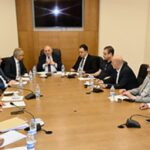
In this context, the Minister of Social Affairs, Haneen Al-Sayed, held an official meeting in Rome with the Minister of Disability Affairs in the Italian government, Alessandra Locatelli, during which ways to enhance bilateral cooperation were discussed, and focus on activating legislative frameworks and transforming them into practical programs.
The discussion focused on the joint cooperation project funded by the Italian government through the Italian Agency for Development Cooperation, which aims to reform the support system through a partnership that brings together the Ministries of Social Affairs, Public Health, Education and Higher Education, along with specialized Italian institutions and expertise.
The project adopts a modern approach to assessing and classifying disability, going beyond the traditional medical model, to place the individual, his needs, and his ability to participate in society at the heart of the evaluation process, based on the International Classification of Functioning, Disability and Health (ICF).
Minister Haneen Al-Sayed stressed that the importance of this partnership lies in building an integrated institutional model in which various state institutions cooperate to secure a comprehensive path for people with disabilities, noting that an essential part of the technical work has been completed, and that the current priority is focused on testing and implementing the model and then gradually expanding it on a national scale.
The two sides discussed ways to enhance Italian support for the next stage, including implementing the pilot model, building the capabilities of multidisciplinary teams, developing referral and case management systems, as well as raising the efficiency of public institutions to provide more integrated services.
The meeting also touched on the axis of economic inclusion, where Al-Sayed stressed the need for social protection not to be limited to service assistance, but rather to extend to creating actual paths towards work and economic independence through training, skills development, job opportunities, entrepreneurship, and enhancing cooperation with the private sector.
The two sides concluded the meeting by agreeing to continue coordination at the ministerial and technical levels, and to expand the scope of the partnership to ensure Lebanon’s transition from the stage of providing dispersed services to building an integrated national system based on rights, inclusion, independence, and equal opportunities.