Among those affected was Ismael Arias, a mathematics teacher who survived after leaving his home minutes before the earthquake, only to later discover that the house he had spent years building had completely collapsed. The United Nations Office for the Coordination of Humanitarian Affairs estimates that about 69,000 people, or approximately 10% of Chocó’s population, were affected or displaced by the disaster.
Relief operations face major challenges, as the region is only connected to the rest of Colombia via two roads, while many towns can only be reached by air or via rivers. More than 200 schools were damaged, while weak internet makes distance education almost impossible.
In the city of Quibdo, the only government hospital is operating at more than double its capacity, after emergency departments were filled with injured people, and doctors were forced to transfer dozens of serious cases to the city of Medellin due to lack of capabilities. The power outage also led to the breakdown of the only refrigerator designated for storing blood bags, before it was replaced with a donation from doctors in the capital, Bogota.
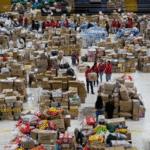
Medical aid arrived from local and international organizations, including medicines, equipment and medical devices, while planes and helicopters were used to reach isolated areas. UN agencies are also working to distribute hygiene supplies and create safe spaces for women inside shelter centers.
Local officials believe that the earthquake highlighted deeper problems, such as weak health services and the absence of roads and electricity networks, in addition to the continued activity of armed groups that control large areas and disrupt the lives of residents.
For his part, Colombian President Abelardo de la Espriria promised to launch a plan to reconstruct Chocó that includes billions of dollars in investments in infrastructure, providing programs to create job opportunities, and providing financial support to families who lost their homes.
But Arias, who is losing his home after years of borrowing to build it, says he does not have much confidence in these promises, stressing that the region’s history of neglect makes him doubt that the compensation will be enough to start a new life. (abc news)