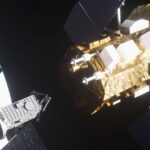
The Swift space telescope, which studies the most powerful explosions in the universe, is now likely to fall on its way back to Earth and disintegrate during it later this year, according to Agence France-Presse.
This unprecedented initiative, which cost $30 million, included sending a robot to rescue the telescope by transporting it further into orbit.
For his part, NASA Director Jared Isaacman said: “This is not the result we were seeking to achieve, but that does not change the fact that this mission was worth trying.”
Isaacman also added, “The team moved very quickly to give SWIFT an opportunity to conduct more scientific research, while enhancing the capabilities that America will need in the future to serve satellites.”
Scientists hoped that this mission would pave the way for giving other satellites a second life. The American start-up company Catalyst developed the space robot that was launched by a small Pegasus rocket, which was in turn launched from an airplane.
But when announcing the failure of the mission, Catalyst indicated that “ongoing situational control problems” were behind its decision, in conjunction with NASA, to cancel the mission.
For its part, NASA explained that the spacecraft will continue trying to reach the Swift telescope in the hope of providing scientists and engineers with useful lessons for similar future missions.