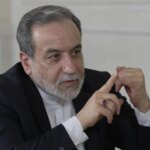
Prime Minister Nawaf Salam received Khaled Al-Anani, Director-General of the United Nations Educational, Scientific and Cultural Organization (UNESCO), where the meeting discussed ways to enhance cooperation between Lebanon and the organization in the fields of education, culture, heritage, media, science and technology.
The two sides discussed supporting Lebanese efforts to protect archaeological and heritage sites and rehabilitate damaged sites, in addition to strengthening the education sector and ensuring the safety of journalists.
The meeting witnessed the signing of a memorandum of understanding between the Lebanese government and UNESCO, signed on the Lebanese side by Minister of Culture Ghassan Salama, with the aim of establishing a comprehensive and sustainable institutional framework for cooperation in areas of common interest.
During the meeting, Salam recalled a historical moment dating back to the year 1948, when the UNESCO General Conference was held in Beirut and adopted the Arabic language as the working language of the conference, noting the participation of the writer Taha Hussein at that time and his giving of a lecture on the Arabic language.
Salam stressed that the selection of Beirut since 2019 as a Creative City for Literature within the UNESCO Creative Cities Network reflects its cultural status, pointing out that, despite the wars, destruction and tragedies it has experienced, especially the Beirut Port explosion in 2020, it is still a vibrant city and carries the banner of culture and renewal in the Arab world.
Salam stopped at the registration of the castles of Jabal Amel and Tyre on the list of threatened heritage sites, considering that this step is of special importance, and stressing that “the attack on heritage is not an attack on stone alone, but rather it is an attack on the people’s memory and the history of the country.”
The visit of the Director-General of UNESCO to Beirut comes in light of historical cooperation between Lebanon and the international organization, dating back many decades, as the Lebanese capital hosted the UNESCO General Conference in 1948, which witnessed the adoption of the Arabic language as the working language of the conference, in a prominent milestone in the organization’s history.