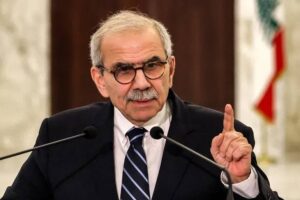
The head of the executive body of the Amal Movement, Mustafa Al-Fouani, confirmed that national unity constitutes “the first line of defense for Lebanon,” stressing that the south is not an issue of a region or a group, but rather a national issue that concerns all of Lebanon, and that protecting the land cannot be separated from protecting people and building the state and its institutions.
Al-Fouani’s words came during his sponsorship of the graduation ceremony of students from Inana High School in Hermel, where he stressed that “building a human being is the first gateway to building a nation,” considering that science is not just an academic achievement, but a responsibility that turns into work, creativity, and service to humans and society.
He pointed out that the real investment in Lebanon lies in the minds of its children and youth, considering that graduation “is not the end of the road, but rather the beginning of a new phase called responsibility, ambition, and work.”
He called on the graduates to transform what they learned into a real impact on their society, to adhere to knowledge, ethics, team spirit, and accept difference, and not to give up in the face of the difficulties and challenges they may face.
Al-Fouani pointed out that Lebanon is facing accelerating challenges in light of the technological and cognitive transformations that the world is witnessing, which, according to him, requires the preparation of a generation capable of critical thinking and creating knowledge instead of just receiving it, stressing that the future of the nation is made by those with initiative and determination to succeed.
He stressed that the Amal Movement is based in its vision that building the human being constitutes the basis for building Lebanon, recalling the vision of Imam Sayyed Musa al-Sadr, which placed the human being at the heart of the concepts of development and the homeland.
Regarding the southern issue, Al-Fouani stressed that “the South is not the issue of a region or a group, but rather the issue of all of Lebanon,” rejecting the continued Israeli presence, attacks, and imposing a fait accompli.
He called for the use of available political, national and diplomatic means to end the Israeli presence and oblige Israel to withdraw from Lebanese territory, allowing the return of people to their towns and villages and the reconstruction of what was destroyed by the attacks, in addition to preserving Lebanese sovereignty and borders.
He stressed that “southern Lebanon is the south of knowledge and steadfastness together,” stressing that protecting the land is inseparable from protecting people, and that loyalty to the martyrs lies in preserving the land, the homeland, and the rights for which they gave their lives.
In an internal message, Al-Fouani considered national unity to be “the first line of defense for Lebanon,” saying: “There is no protection for Lebanon without national unity, no sovereignty without a state and institutions, and no stability without civil peace.”
He called for the adoption of dialogue, the state and its institutions as a reference for the Lebanese, national unity as a fortress for them, and coexistence as an irreversible option, in light of the challenges facing the country at the political, security and economic levels.
Regarding Palestine, he considered that it is “not a seasonal issue, but rather a compass that reveals the nature of the conflict,” calling on Arab and Islamic countries and peoples to overcome their differences and expand areas of convergence and dialogue in the face of the dangers of disintegration and attacks.
Al-Fouani refused to turn Lebanon into an arena for the conflict of the Lebanese, stressing that what is required is “a strong Lebanon with its unity, state, institutions, army, people and resistance,” and capable of managing its differences through dialogue instead of clashes.
He considered that resistance in its national meaning consists of rejecting the Israeli presence, surrendering to the status quo, and adhering to a person’s right to his land, dignity, and sovereignty.
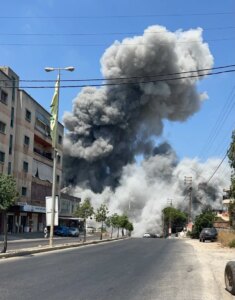
Al-Fouani’s position comes at a time when the south is witnessing a continuous Israeli escalation, with raids, bombings and military operations that have recently affected a number of towns and regions, causing martyrs and injuries and damaging homes and infrastructure, in parallel with the issue of the return of residents and reconstruction continuing to be at the heart of southern priorities.
His talk about the role of the state and national unity also coincides with an internal phase in which discussions focus on consolidating the authority of official institutions, strengthening the presence of the Lebanese army, and protecting sovereignty, in light of the security and political transformations taking place in the south.
At the end of his speech, Al-Fouani returned to addressing the graduates, calling on them to make their success a bridge for others to cross, and to combine this success with humility, responsibility, and national commitment, directing his greetings to the families, teachers, and high school administration, stressing that education remains one of the most prominent means of building human beings and shaping generations.
He stressed that Lebanon needs a generation that “does not wait for the future, but rather creates it,” stressing that the south will remain “a land of steadfastness and dignity, not a land of forgetfulness,” and that what is required is a homeland in which the state is strong with its institutions, the south is protected, the borders are protected, the Israeli presence is rejected, and national unity is above all disagreement.
Al-Fouani concluded by saying: “With knowledge we protect humanity, with unity we protect the nation, and with determination we do not allow Israel to create a future for Lebanon.”
The celebration included speeches inspired by the occasion, before shields were distributed to the graduates.