November 20, 2026

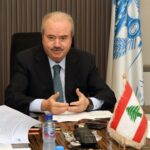
Finance Minister Yassine Jaber confirmed that Lebanon is continuing on the path of financial discipline, in preparation for reaching a program with the International Monetary Fund that would open the doors to broader financing and private investments.
This came during a meeting held at the Ministry of Finance in the presence of the Minister of Economy and Trade, Amer Al-Bassat, and a high-level delegation from the European Bank for Reconstruction and Development, which included Board Member John Nicolaysen, Vice President for Banking Affairs and Chairman of the Executive Committee, Matteo Patron, and Head of the Bank’s operations in Lebanon, Alessandro Vittadini, accompanied by a technical team. The Director General of Public Finance, George Maarawi, and advisors Samir Hammoud, Zeina Kassem, and Claudine Karaki also participated in the meeting.
The meeting was devoted to discussing the economic recovery path, opportunities for financing the electricity transmission network, port expansion, and supporting the private sector. During it, Minister Jaber stressed that “reform is the gateway to recovery,” appreciating the European Bank’s partnership in the fields of energy, infrastructure, and private sector support.
For its part, the bank delegation indicated, according to a statement by the Ministry of Finance’s media office, that between 50 and 60 million dollars had been allocated to Lebanon for development purposes, explaining that expanding the scope of the bank’s operations was closely linked to Lebanon reaching an agreement with the International Monetary Fund, while its activity was currently limited to providing advisory services and facilitating trade.
In the electricity sector, the attendees discussed the possibility of providing initial financing worth $50 million for energy transmission networks, with the aim of linking decentralized solar energy projects to the national grid and reducing the cost. The delegation also presented green energy financing mechanisms that grant loans to banks to support projects, with donors providing a 15% cash incentive upon project completion, with an investment multiplier of up to six times.
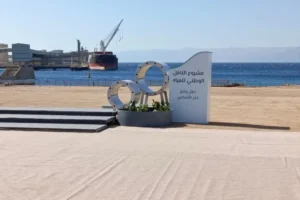
The discussion touched on stimulating trade and enhancing regional integration, with estimates that this integration will contribute to raising the gross domestic product by no less than 2%. In this context, the expansion of the port was discussed to raise its capacity to 3 million containers annually, and a tender was issued to select an operator from the private sector to build new shanties, noting that the bank had provided technical assistance in managing the shanties in cooperation with the FAO.
As for the private sector, the delegation reviewed investment and advisory opportunities, including providing services to a company operating in the artificial intelligence sector, while studying investment in its capital later, and preparing to complete a transaction with a microfinance institution next February, as well as a proposal to establish an investment fund focusing on the Lebanese market in consultation with the International Finance Corporation.