November 20, 2026

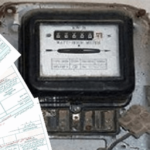
The Council of Ministers is preparing to study a new mechanism for electricity tariffs that depends on variable elements that move up or down accordingly, based on data prepared by the Electricité du Liban on October 23, under the direction of Energy Minister Joe Al-Saddi, with the aim of recovering the full cost, keeping up with fluctuations in fuel prices and the number of feeding hours, and arriving at a financial recovery model.
In this context, Al-Akhbar newspaper reported that the Ministry of Energy proposes, according to current data, to increase the tariff by 40% for the first part of consumption up to 100 kilowatt hours, and by 21.3% for the second part, which covers the rest of the consumption.
The “moving tariff mechanism” is based on eliminating previous assumptions in pricing and adopting variable cost elements on a periodic basis. The new model is based on several basic links, including: not being limited to calculating the cost of one type of fuel, but rather taking different types such as gas oil, fuel oil, and later gas into account, and introducing the thermal efficiency of production plants through a mathematical model that integrates the quantities of fuel needed for each plant to produce one kilowatt-hour and calculating the contribution of each source according to its cost, as well as adopting a financial recovery model linking pricing to production, operation, and spending to protect the financial balance of the Electricité du Liban, while stopping the calculation of the Iraqi oil agreement, which was affecting Previously on cost accounts.
The basic premise of the tariff is to cover the entire cost to ensure that the EDL is not exposed to any financial losses resulting from technical and non-technical waste such as theft or suspension. This means that regular paying subscribers will be charged the full cost of losses. According to the model’s estimates for the year 2026, annual revenues are estimated at approximately $1.091 billion compared to expenditures of $1.088 billion, achieving a surplus of $3 million.
Despite this accounting balance, the statement of cash flows in the same study shows that the model suffers from a cash deficit of $224 million in 2026, and a negative cash balance of $13 million at the end of the year, due to the gap between invoiced revenues and those received, in addition to investment spending and repayments. This situation confirms that the accounting balance of the tariff does not necessarily guarantee the availability of the operating liquidity necessary for the institution to purchase fuel for factories or to finance its investments and capital expenditures.