International retirement of football stars: between the reasons for failure and the pressures of disagreements
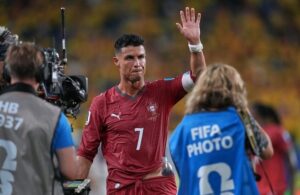
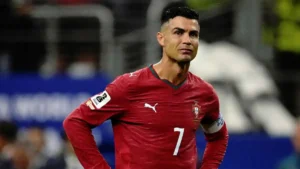
Portuguese star Cristiano Ronaldo’s announcement of his retirement from international football was not merely the end of an exceptional career with his country’s national team, but rather it reopened the discussion about a recurring phenomenon in international stadiums. When first-class stars decide to put an end to their international careers for reasons that go beyond advanced age or a decline in technical level, to include disputes with coaches, crises with football federations, public and media pressure, and frustration resulting from major failures.
Over the past years, retirement decisions ranged between a natural farewell after achieving achievements, and an atmosphere charged with criticism and disagreements, which made some of them turning points in the history of modern football, while other players retracted their decisions and returned to represent their teams.
Ronaldo…farewell amidst tension with the technical staff
On November 5, 2026, Cristiano Ronaldo announced an end to his career with the Portuguese national team with the end of the November international matches window, leaving after playing 234 international matches and scoring 146 goals, achieving a historical record. During his career, Ronaldo led Portugal to win the European Nations Cup in 2016 and the European Nations League in 2019 and 2025, in addition to participating in six editions of the World Cup.
The decision came at a time that witnessed tension in his relationship with the technical staff led by coach Jorge Jesus. According to Anatolia Agency, Ronaldo left the national team camp last September after being left on the bench against Norway, accusing the coach of breaking his participation promises. Although he later apologized to the fans and colleagues amid reports of a penalty imposed by the Portuguese Federation, Ronaldo did not directly attribute his decision to the dispute, presenting it as the conclusion of a journey that lasted 23 years, while continuing to play with the Saudi Al-Nasr Club.
Messi…the pressures of failures and public criticism
Argentine star Lionel Messi surprised the world in June 2016 by announcing his international retirement after losing the Copa America final to Chile and missing a penalty kick. The move came under the weight of a series of defeats in the finals, including the 2014 World Cup and the Copa America editions in 2007, 2015 and 2016. At the time, he expressed his frustration at not winning a major title, in conjunction with sharp media and public criticism. However, Messi retracted his decision about two months later, later leading Argentina to the 2022 World Cup and the 2021 and 2024 Copa America titles, stressing that retirement may sometimes be a temporary reaction to the accumulation of pressure.
Mesut Ozil…an identity crisis and accusations of racism
In contrast to purely sporting cases, the retirement of German Mesut Ozil in 2018 was linked to a political and social crisis, following the exit of the German national team from the group stage of the World Cup in Russia. The move came in July 2018 after widespread criticism he received following a photo of him with Turkish President Recep Tayyip Erdogan. Ozil (92 international matches and 2014 World Cup champion) announced the end of his career, accusing the German Federation and the media of practicing racial discrimination and lack of appreciation because of his Turkish roots.
Toni Kroos.. The priority of the career with the clubs and family
In July 2021, German Toni Kroos announced his international retirement following his country’s exit from the European Cup final against England. Kroos did not link his decision to crises or disagreements, but rather explained that he preferred to focus on his goals with Real Madrid and his family, after a career that included 106 matches and winning the 2014 World Cup.
Zinedine Zidane.. retired in search of readiness
French legend Zinedine Zidane announced his retirement in 2004 after a career full of World Cup 1998 and European 2000 titles, to make room for the new generation. But he retracted his decision in 2005 to help France reach the 2006 World Cup, before confirming in April 2006 his final retirement after the tournament, affected by advanced age and the results of his club, Real Madrid.
Retirements after the 2026 World Cup…the end of an era
The period after the 2026 World Cup witnessed the departure of a number of the most prominent stars of world football:
- Manuel Neuer: Germany goalkeeper (128 matches, 2014 World Cup champion), who ended his international career after an exceptional return to participate in the tournament.
- Neymar: The Brazilian star who announced his retirement following Brazil’s exit in the last 16 against Norway in the 2026 World Cup, bringing down the curtain on his career (80 goals in 130 matches), which was marked by injuries and global failure.
- Riyad Mahrez: The captain of the Algerian national team, who concluded his international career after the 2026 World Cup, leaving after leading the historic generation to win the 2019 African Cup of Nations.
a summary
These experiences confirm that international retirement is not subject to one rule; Some players leave affected by disagreements, such as Ozil, or frustration, such as Messi, or personal and professional considerations, such as Kroos and Zidane, leading to the complex relationship between identity, public pressure, and the circumstances surrounding the national teams. Between those who retract their decision and those who proceed with their final decision, international retirement remains an announcement of turning a whole page in the career of stars.