October 29, 2026

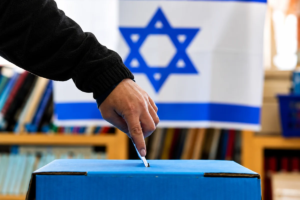
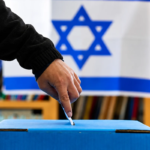
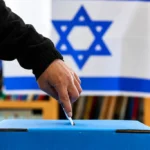
The Israeli political arena is sliding towards a complex governance crisis open to all possibilities, following the shocking results produced by the latest vote counting in the recent legislative elections. According to the semi-final numbers revealed by the Yedioth Ahronoth newspaper after counting about 98.6% of the regular polling stations, Prime Minister Benjamin Netanyahu’s camp is still unable to obtain the majority of the 61 seats needed to form the government on its own, which places Israel before an unfamiliar equation in which fragile balances intertwine with an unprecedented growth of Arab political weight in the Knesset.
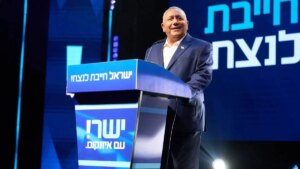
The interim seat map reflects a sharp division. Netanyahu’s camp won 53 seats (distributed between 26 for Likud and 27 seats for his allies from the parties Shas, United Torah Judaism, Jewish Power, and Religious Zionism), so he remains in dire need of eight additional seats to reach government safety.. On the other hand, the change camp led by Gadi Eisenkot won 48 seats (led by the “Ya’shar!” party with 21 seats, and supported by the “Together” coalition, the Democrats, and Yisrael Beytenu), remaining in turn far from the dream of a majority by a margin of 13 seats..
Amid this blockage, the biggest surprise emerged that turned the calculations upside down: an exceptional jump in the size of the Arab bloc, which won a full 19 seats (divided between 11 seats for the Joint List and 8 seats for the unified “Ra’em” List led by Mansour Abbas), driven by record electoral participation within the Arab world.. This balanced presence made the Arab representatives the actual “egg egg” for any governmental process. Eisenkot’s camp is mathematically capable of crossing the threshold of 61 seats if it succeeds in formulating political understandings with the Arab bloc, whether through direct participation or providing a parliamentary safety net..
However, this mathematical approach collides with explosive political minefields. Many Israeli parties, led by “Israel Our Home” led by Avigdor Lieberman, absolutely refuse to engage in any governmental combination based on Arab support, not to mention Likud’s maneuvers seeking to challenge the legitimacy of this cooperation, taking advantage of an investigation opened by the Shin Bet agency regarding suspicions of foreign financing of Arab electoral activity.. Attention is currently turning to the “double envelopes” (votes for military personnel, prisoners, and hospitals), the counting of which has not yet been fully resolved, and which may bring about minor but decisive adjustments in the redistribution of seats, especially for parties that fluctuate at the 3.25% electoral threshold..
Pending the announcement of the official and final results, Israel stands before the worst options: either drowning in a long marathon of arduous coalition negotiations that may produce a fragile and weak government, or sliding again towards early elections, at a very precise regional timing that coincides with a sharp escalation on the Lebanese front and military preparations for scenarios of open confrontation with Iran.