October 22, 2026

Lebanon is witnessing escalating political and security tensions that threaten to explode, transcending the traditional differences between the state and Hezbollah to a very sensitive stage that could turn any uncalculated mistake into an open confrontation.
In this context, diplomatic efforts intersect through an Iranian, Qatari, French and Arab movement, in addition to the movement of the Secretary-General of the League of Arab States, with a primary goal focused on preventing any potential confrontation between Iran and Israel from spreading into Lebanon, and containing the escalating tension between the state and Hezbollah. This movement included a mediation proposal presented by the Qatari envoy during his meeting with Hezbollah officials, with the aim of calming the situation between the party and the President of the Republic, Joseph Aoun.
The roots of this tension go back to unprecedented steps taken by the state, which Hezbollah considered a violation of its red lines, especially in the file of its weapons and military structure. These measures consisted of confiscating a shipment of explosives and not releasing it, and arresting the elements associated with it, leading to presenting the file to the Council of Ministers in preparation for referring it to the Judicial Council, which observers considered an increase in the state’s confrontation with the party.
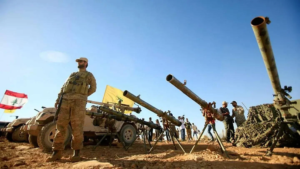
In response, Hezbollah publicly claimed responsibility for the shipment, and escalation developed on the ground with the army raiding an ammunition warehouse outside the southern suburb. Although the party withdrew from the site without entering into an open confrontation with the army, the operation was considered a dangerous indicator of the security services’ approach to the party’s areas of influence in isolation from traditional coordination mechanisms. The crisis has become related to the limits of the state’s actions and the lines that the party considers crossing as a violation of the existing security and political understandings.
Hezbollah is dealing with this stage according to an equation that measures the cost of silence against the cost of escalation. As long as containing the pressure is less costly, it will continue to control its responses, but compromising its weapons or trying to change security understandings may push it toward internal military action. The greatest fear is the possibility that, in the event of a regional confrontation between Iran and Israel, the party will resort to directing its response inside Lebanon, similar to the events of May 7, instead of opening the southern front, which is a scenario that constitutes a major security and political concern.
These fears were reflected on the ground by the widespread security alert around government palaces during the warehouse crisis, for fear that matters would slide towards a comprehensive confrontation. In parallel, the recent security meeting at Baabda Palace witnessed a sharp criticism directed by President Joseph Aoun of the positions of MP Hassan Fadlallah (a member of the Hezbollah parliamentary bloc), considering them a departure from official decisions and a challenge to the state’s authority. Official circles are studying possible political and judicial steps to deal with these situations, amid warnings that the introduction of the judiciary may be interpreted as a disguised political escalation that threatens the independence of judicial institutions.
In the field, circulating data denies rumors about large-scale transfers of Hezbollah members between the Bekaa, the South, and the suburbs, confirming that the party relies on an organized and limited regional spread.
The current mediations seek to buy time and reduce the intensity of the political discourse to prevent undermining security understandings, as the delegates agree on one message: the necessity of fortifying the home front before the regional situation explodes, in light of real fears that any miscalculation in Beirut will lead to an open security crisis whose end cannot be predicted.