October 9, 2026

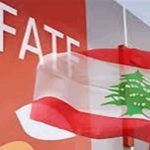
The Lebanese arena is witnessing an escalation in the pace of American and European pressure aimed at tightening the siege on Hezbollah’s financing channels and institutions, with direct and indirect notifications to Lebanese officials about the end of the grace period, and a refusal to use fears of the emergence of internal problems as an excuse. In this context, the regular meeting of the International Financial Action Task Force (FATF) in France at the end of this month stands out as an essential station for monitoring the required progress in implementing the laws and filling the gaps that two years ago led to Lebanon being included in the “gray” list of countries that suffer from deficiencies in combating money laundering.
On the diplomatic level, information from Al-Binaa newspaper indicated that there is an Arab movement towards Lebanon to find a solution to the Hezbollah weapons crisis, with the aim of blocking the way for Israeli Prime Minister Benjamin Netanyahu’s plan to blow up the southern front to disrupt the elections and avoid losing the majority in the Knesset or improve his electoral chances. In the same context, a senior Lebanese official conveyed to Hezbollah an external offer based on the old “Egyptian paper” to contain the weapon in stages, starting with freezing it, then assembling it, and preventing its use.
On the other hand, Al-Diyar newspaper indicated that Washington has reactivated the financial war against Hezbollah, amid expectations that the party will record a net profit within days with the start of disbursing shelter dues, despite American skepticism about its financial capabilities. On the other hand, the Lebanese state appears to be shackled by the complex American conditions for monetizing reconstruction aid, and is content with timid treatments for the economic collapse, as Prime Minister Nawaf Salam’s movements were limited to monitoring prices and generators, in conjunction with new financial steps to be taken by the Bank of Lebanon in the file of recovering funds and deposits.
Prominent political sources stopped short when US State Department spokesman Tommy Pigot questioned the veracity of reports that Hezbollah had recently received $200 million from Iran, and his assertion that the US administration would not allow the party to recover or rebuild its infrastructure. The circles believed that the next few days would witness embarrassing developments for Washington after it rushed to deny the news, at a time when Hezbollah had finished preparations to announce a plan to distribute funds to pay a six-month shelter allowance of $500 per month to the families whose villages were destroyed, whose number is estimated at about 50,000 families, with the details to be announced in a press conference held by the Chairman of the Executive Council, Sheikh Ali Damoush. These circles consider that Washington is contributing to weakening the position of the Lebanese state by betting on negotiation without pressuring Israel to implement the “Framework Agreement,” in addition to refraining from providing development aid to the affected areas.
As for the financial reforms required internationally, Al-Sharq Al-Awsat newspaper explained that the list of demands tops the priorities of controlling cash flow, monitoring transfers and electronic wallets, activating judicial prosecutions, and facilitating the recovery of illicit assets. The Lebanese side acknowledges that billions of dollars linked to corruption and transfers of politically exposed figures (PEPs) have not received adequate scrutiny.
Although the legitimate financial sector adheres to compliance standards, the Lebanese authorities face difficult tasks to control the monetary economy and illegitimate institutions, and combat vulnerabilities in exchange offices and electronic wallet services. In this context, the international community requires – according to a concerned official who spoke to Asharq Al-Awsat – to resolve the file of the “Al-Qard Al-Hassan” Association or any alternative institutions, tighten control over cross-border cash flows, keep pace with the Central Bank’s procedures in verifying suspicious transfers, and strictly adhere to the international sanctions lists imposed on individuals and companies to prevent them from circulating money through commercial and real estate activities.