October 2, 2026

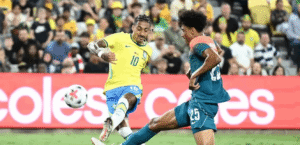
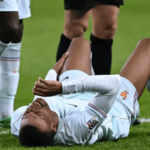
The current international break has brought to light the crisis of protecting players and the distribution of responsibilities between clubs and teams, coinciding with the occurrence of prominent injuries, including Frenchman Kylian Mbappe, German Kai Havertz, and Uruguayan Georgian de Arrascaeta.
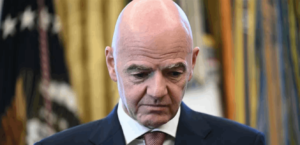
These injuries were accompanied by a modification in the form of the international break, as the International Federation of Association Football (FIFA) – starting in 2026 – merged the September and October windows into one continuous period of 16 days that allows four matches to be played, instead of two separate stops lasting nine days each with two matches for each. Although this amendment aims to reduce intercontinental travel and limit the interruption of club competitions, it raises fundamental questions about how to manage playing minutes and recovery within a close match schedule.
The recorded injuries varied in nature. Real Madrid announced that Kylian Mbappe suffered from hyperextension in the posterior capsule of the left knee (with Spanish reports estimating his absence between 10 and 12 days), while Kai Havertz returned to Arsenal due to a muscle strain, and Flamengo player Georgian de Arrascaeta suffered a wrist fracture that required surgical intervention, which prevents these injuries from being considered a direct and sole result of fatigue or a long layoff.
This situation reflects a continuing conflict of interests. The club depends on the player throughout the local and continental season, while the national team seeks to achieve quick results within a limited window of time, which leads to the accumulation of playing minutes without an accurate assessment of the player’s physical readiness, regardless of the fatigue before joining and after returning.
On the other hand, the teams alone cannot be held responsible, given the clubs’ involvement in draining the players’ energies, which makes it necessary for any serious discussion of protection to cover the entire season, to avoid turning the stopping periods into an arena for exchanging accusations in isolation from studying the size of matches and rest periods.
Financial solutions are not sufficient to address the mathematical dimensions; FIFA’s club protection program provides compensation linked to a fixed salary for injuries whose duration of temporary disability exceeds 28 consecutive days. However, financial compensation remains unable to fill the void of the absence of a crucial player from crucial matches that determine the course of the season.
Accordingly, the real test of the new international window goes beyond simply reducing travel trips, to be measured by the ability of clubs and teams to exchange medical reports and organize participation based on the full physical burden placed on the player, ensuring joint management of effort that serves the goal of sports protection.