The United States is moving toward gradually reducing its dominant role in the Middle East, in a strategic shift that may end decades of American attempts to impose regional order by force, wars, and secret operations. A report by “The Economist” magazine, prepared by journalist Eli Leon, indicates that Washington – despite its current involvement in a difficult confrontation with Iran with no easy way out – stands on the threshold of a historical moment in which it will step back from the role of “architect of the Middle East,” and become a seasonal military player rather than a balance maker.
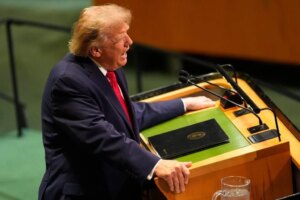
Indicators of this American retreat are evident in several pieces of evidence: The most prominent of which are the threats made by US President Donald Trump in his speech before the United Nations General Assembly this week, when he gave Iran the choice between reaching an agreement or being subjected to “genocide.” In addition, in early September, Washington refused to join its ally, Saudi Arabia, in launching strikes against the Houthis in Yemen, preferring to hold behind-the-scenes talks to ensure the security of American ships.
In the same context, there are expectations of a significant reduction in the US military presence in the region, which usually ranges between 30 and 40 thousand soldiers distributed among 19 bases. This step came after the current war demonstrated the fragility of American forces in the face of low-cost drones and missiles, which prompted military experts to demand that the presence be restricted to limited locations, including Israel and Jordan, coinciding with the shift of the Trump administration’s priorities towards the Western Hemisphere and the intense competition with China, as demonstrated in his recent summit with Chinese President Xi Jinping.
Although China is the largest importer of Gulf oil, The Economist confirms that it does not show any desire to replace Washington as the new hegemonic power. Instead of hegemony shifting to another global power, the magazine points to the emergence of three regional powers – none of which are Arab – that will compete to fill the expected American vacuum.
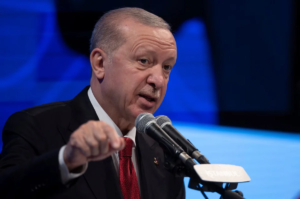
The first force is Iran, which will seek to rebuild its network of armed agents and consolidate its control over the Strait of Hormuz. Türkiye comes as a second power, as it is quietly working to strengthen its relations with the Arab countries based on economic and pragmatic calculations. As for the third force, it is Israel, which has transformed since the events of October 7, 2023 into something resembling a “modern Sparta,” determined to destroy any existential threat to its security.
In light of these changes, the Arab countries, especially the Gulf countries, will be the biggest losers. These countries depend on accelerated economic development projects, in parallel with a long-term dependence on the American security umbrella.
The conclusion of reading “The Economist” is that the American withdrawal does not mean the complete absence of Washington, but rather the end of the era of engineering regional balances from the outside, defining the next stage as a complex regional system in which Iran, Turkey and Israel are struggling for influence, and in which the Arab countries find themselves required to deal with a new security equation that stems from the core balance of power within the region itself.