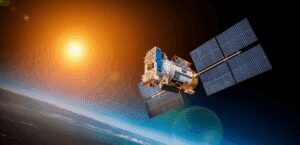
Google is preparing to conduct an unconventional experiment that could radically transform the future of artificial intelligence infrastructure, by sending custom chips to run these applications to outer space.
This step aims to explore the possibility of building large-scale computing systems outside Earth, to meet the rapid rise in demand for energy and computing capabilities needed to run advanced artificial intelligence models.
In this context, Google intends to launch a model satellite within its “Suncatcher” research project next week, on board the “Transporter-18” mission of SpaceX, in cooperation with the satellite company “Planet.” The satellite will carry on its surface the “TPU” chips developed by Google specifically to accelerate machine learning processes and run artificial intelligence applications.
With artificial intelligence models consuming huge amounts of energy, technology companies are seeking to find innovative solutions to expand data centers. Google believes that space provides a strategic advantage in benefiting from sunlight almost continuously in orbit, which allows the generation of solar energy for longer periods compared to ground facilities, with long-term plans to link groups of satellites together to provide greater computing capabilities.
However, this first experiment is not an announcement of the operation of an actual “data center” in space. Rather, the prototype satellite aims primarily to test the efficiency of the company’s chips in a space environment that is radically different from terrestrial data centers.
The chipsets will be subjected to severe tests in the face of several challenges. The most notable are space radiation, forces and vibrations resulting from launch, and extreme thermal changes. Although ground tests demonstrated the ability of the “Trillium TPU” chips to withstand doses of ionizing radiation exceeding what a five-year space mission would be exposed to, the actual performance in orbit will reveal the extent of the equipment’s resilience in its real environment.
Google also faces a complex technical challenge of cooling, given the absence of air currents in space. To overcome this, the company relies on the use of heat pipes and radiators to dissipate the heat generated during operation.
In the near term, Google plans to test communication technology between two satellites using laser beams in 2027, in preparation for implementing a more comprehensive scenario that includes deploying groups of satellites, each of which carries dozens of “TPU” chips exchanging data with each other at high speeds.