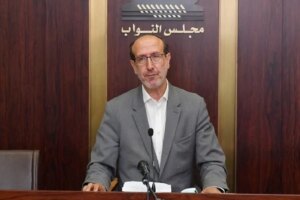
The head of the economic bodies, Mohamed Choucair, confirmed that the atmosphere of the meeting of the ministerial committee in charge of dialogue with the General Labor Union was characterized by positivity, considering that the coming together of the various parties around one table represents an extremely important step to address the outstanding economic and social issues.
In a statement to the “Lebanon Debate” website on the sidelines of the meeting, Choucair explained that the state’s participation alongside the private sector and workers reflects a collective awareness of the difficulty of the current circumstances, calling for approaching the crisis with complete realism and pointing out that the economic challenges are not limited to Lebanon alone, but rather extend to several countries such as France.
Choucair explained that the summer tourism season, which was much relied upon, recorded a decline of about 30 percent, which negatively affected the movement of arrivals through Beirut Airport and purchasing power in the markets, stressing that any decline affecting the “southern economy” or any other region will inevitably reflect on the Lebanese economy as a whole.
The head of the economic bodies warned against neglecting the role of the private sector in the continuity of the state, saying, “The state lives from the taxes paid by the private sector, and if the private sector collapses, there will be no private sector and no workers,” calling for calm thinking, away from high-pitched media bidding and slogans, to reach realistic and tangible solutions.
Regarding reaching a consensus formula with the General Labor Union, Choucair confirmed that the Minister of Labor understands the difficult living situation of the Lebanese, stressing the quest to find solutions that help citizens without doing so at the expense of the private sector or leading to its collapse.
Choucair concluded by stressing that an essential part of the living pressures is due to the significant rise in energy prices, which is a factor beyond the control of local parties, and is directly reflected in various sectors and the cost of living and production.