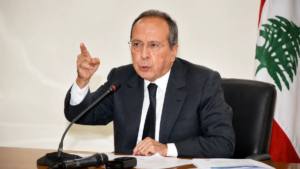
Minister of Culture Ghassan Salama announced that the Ministry, represented by the General Directorate of Antiquities, had received a financial donation amounting to 435 thousand US dollars, allocated exclusively for the development of the archaeological site in the town of Shehim, with the aim of preserving the cultural heritage and including the town on the local and international tourist map.
This came during a field visit conducted by Minister Salama to the historical site, accompanied by the Minister of Interior and Municipalities, Ahmed Al-Hajjar, along with a crowd of activists from the town of Shehim and the surrounding area. Salama explained that the donation mainly aims to create a wall surrounding the site, which extends over an area of 25,000 square meters, to protect it from encroachment, after previous experiences that witnessed the disappearance of important mosaic pieces during the 1960s.
He added that the objectives of the grant include completing the restoration of the Byzantine church, as well as linking the archaeological site to the town’s historical economic identity represented by olive presses, by encouraging the cultivation of olive seedlings, providing the necessary training, and supporting the presses to maintain their continuity. He confirmed that the Director General of Antiquities and the immediate team are in preparation for the start of field work in Shehim soon.
In a related context, Salama pointed out the importance of enhancing cultural life in the town, which is inhabited by between 40 and 50 thousand people, pointing out his visit to Qabalan’s house, which is listed on the list of historical buildings, and the possibility of transforming it into an effective cultural center, stressing the Ministry of Culture’s full support for the municipality in all cultural projects.
For his part, the Minister of Interior and Municipalities, Ahmed Al-Hajjar, appreciated the visit of the Minister of Culture and his continued support for Shehim, stressing that this gift will contribute greatly to preserving the history of the town, which is rich in antiquities and successive civilizations, and praising the role and successes of its people.
It is noteworthy that historical documentation of the Shehim site dates back to 1864 through Ernest Renan. In the 1960s, the General Directorate of Antiquities began expropriating land and carried out extensive excavation and consolidation work that stopped with the outbreak of the civil war in 1975. Later, in 1996, the Directorate resumed excavation work in cooperation with the Polish University of Warsaw and the French Institute of the Near East (IFPO).
Chehem is the first rural site in Lebanon where systematic archaeological excavations were conducted, as research revealed a Roman temple, residential houses, and six olive presses, in addition to a Byzantine basilica church that includes mosaic floors preserved in good condition.