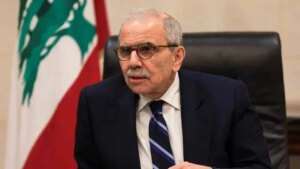
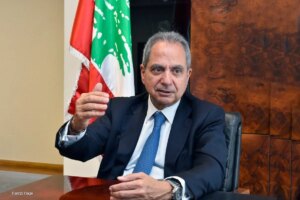
Representative Ibrahim Kanaan confirmed, during a session of the House of Representatives, that the equation of protecting national sovereignty does not tolerate ambiguity, stressing his refusal to entrust the Lebanese army with major responsibilities while it is left waiting for aid and promises. He explained that making the military institution the only security and military reference on Lebanese territory and protecting the borders first requires providing the funding, equipment, and political decision necessary to carry out these tasks, according to the rule of “no assignment without empowerment, and no accountability for results without providing its tools.”
These positions come in light of a campaign of skepticism against the military establishment, represented by what the media reported from a source in the US Department of War regarding the attribution of the army’s poor performance to an “issue of will” and not a lack of resources. In response, the report indicated that this accusation was devoid of any factual evidence, as the source did not specify a mission that the army failed to implement, capabilities that it refrained from using, or political decisions that it refrained from implementing.
In the context of distinguishing between tasks, Kanaan pointed out the difficulty of asking the army to confront Israeli attacks without providing modern combat aircraft, air defense systems, and missile and intelligence capabilities that match the existing dangers, especially in light of the superiority of the Israeli arsenal and the absolute political support it receives. He stressed that the soldier cannot be accused of weakness of will for not being given the appropriate weapon to confront a superior military machine.
Regarding the issue of the exclusivity of weapons in the hands of the state as a basic condition for the establishment of sovereignty, Kanaan stressed that the army implements the state’s decision and does not make it, and does not develop national strategies or determine how to deal with Hezbollah’s weapons alone. He explained that this mission requires a clear political decision, an implementable plan, and national cover to avoid pushing the institution towards an internal confrontation, criticizing the inability of politicians to make decisions and cast the consequences on the soldiers.
At the international level, the report questioned the reasons for the international community’s demand that the army carry out major tasks without providing equivalent capabilities, considering that current aid to maintain security is necessary but not sufficient to build an army capable of protecting sovereignty and confronting external threats. Locally, the Lebanese state was called upon to secure a serious budget for the institution, protect the rights of the military, stabilize their salaries, and provide for their operational needs.
The report concluded by pointing out the role of the army deployed on the border and in the south, which confronts terrorism, smuggling, and drugs and protects stability despite the economic collapse. He stressed that holding the army accountable when it makes a mistake is a right and a duty, provided that it is not insulted or held accountable for the consequences of absent decisions and unavailable capabilities, summarized by the “Golden Canaan Equation”: whoever wants the army as a sole reference, let him give it its tools, and whoever demands it to protect the land and limit weapons, let him secure decision-making, funding, and armament.