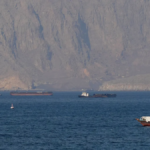
The Iranian Revolutionary Guard announced the targeting of an oil tanker flying the Togolese flag in the Strait of Hormuz, claiming that it attempted to cross the vital passage “illegally at the instigation and misinformation of the US military.”
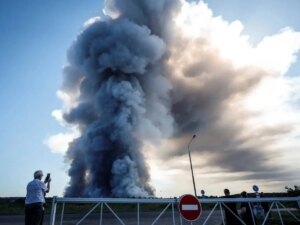
The official Iranian news agency “IRNA” quoted the Commander of the Revolutionary Guard Navy, Admiral Ali Azmaei, as saying in a statement issued at dawn on Friday that his forces targeted the tanker “Trend” and forced it to stop after a fire broke out on board.
This comes in conjunction with a report from the British Maritime Trade Operations Authority, on Thursday evening, that a security incident occurred 16 nautical miles (about 29.5 kilometers) northeast of the Omani city of Khasab, without definitive confirmation of its connection to the tanker that the Revolutionary Guard announced was targeting.
In a related context, the Strait of Hormuz is witnessing a sharp decline in navigation traffic due to security restrictions. Preliminary ship tracking data on Thursday showed a decrease in the number of transiting basic commodity ships to only 3 ships on Wednesday, compared to 12 ships the previous day, and an average of about 17 ships during the last ten days.
It is noteworthy that before the outbreak of the Iranian war on February 28, the Strait witnessed the crossing of about 125 major commercial ships daily, noting that the passage is of great strategic importance for the passage of approximately 20% of the daily global supplies of crude oil and liquefied natural gas.
These developments coincide with the intersection of four layers of restrictions and field paths in the strait. It includes an American blockade targeting the movement of ships linked to Iranian ports, a prohibited zone that Tehran threatens to impose, and a sea corridor that Tehran is discussing with the Sultanate of Oman, in addition to a security path that Washington confirms working to protect to secure freedom of international navigation.