The French capital, Paris, places the field and political developments in southern Lebanon at the top of its regional priorities, coinciding with a diplomatic and military movement aimed at supporting the Lebanese military establishment and preventing any potential security vacuum, at a time when it has taken firm positions towards both Moscow and the Houthi group.
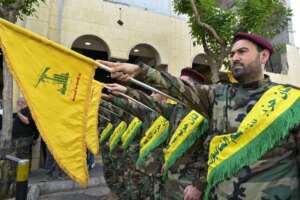
In exclusive statements to the Al Arabiya English platform, the French Ministry of Foreign Affairs confirmed that intensive discussions are currently being held to discuss mechanisms for avoiding a security vacuum in southern Lebanon, in parallel with studying ways to assist the Lebanese government in disarming the “party.”
In the same context, the French Foreign Ministry announced that Paris is ready to organize an international conference dedicated to supporting the Lebanese army, as a continuation of French efforts aimed at strengthening the capabilities of the military institution and keeping pace with security developments in the region. This approach comes as an extension of the high-level security meeting hosted in Paris on September 17, which was devoted to discussing the urgent needs of the Lebanese army and alternative scenarios for the post-end mission of the United Nations Interim Forces in Lebanon (UNIFIL), amid increasing concerns about the repercussions of the lack of security stability in the south.
At the European and international levels, the French Foreign Ministry raised the level of its rhetoric towards Russia, stressing that Russian cyber attacks inside the Old Continent are accelerating, and stressing France’s readiness to respond to any possible escalation by Moscow. The French assessment stressed that Russia is “failing on the ground,” calling at the same time for the need for continued military and political support for Ukraine.
In the file of maritime navigation security in the Red Sea, Paris reiterated its continued active participation in the European maritime operation “ASPEDS” to protect international trade lines. The French Foreign Ministry also strongly condemned the Houthi attacks targeting Saudi territory, stressing its country’s firm commitment to participating in efforts to protect freedom of regional and international navigation.
All of these positions reflect a multi-track French strategy, moving along parallel lines that include supporting the Lebanese army and preventing a security vacuum, continuing pressure on the issue of disarming the “party,” and confronting what Paris describes as an accelerating Russian escalation, in addition to securing the military and naval presence in the Red Sea.