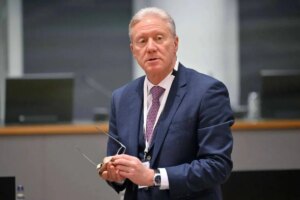
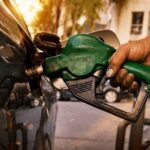
The Lebanese economy is floundering under the weight of escalating living crises, including rising prices of fuel, energy, education, and medical care, amid a sharp erosion in citizens’ purchasing power and the absence of official remedies. In this context, the Director of the Economic and Social Center for Strategic Studies, Dr. Ahmed Jaber, warned, via the “Lebanon Debate” website, of the seriousness of the repercussions of the rise in oil prices globally and locally on the productive sectors, anticipating an increase in poverty and unemployment rates in the absence of a clear vision for building the state.
Jaber criticized the recent granting of confidence to the government, considering that parliamentary and governmental discussions completely ignored the citizen’s suffering, hunger, poverty, and the continuous erosion in his purchasing power, as if the government provided great services and improved health and social conditions. He pointed out that the world is facing a cold wave that will increase global demand for fuel and raise its prices, which will have a negative impact on Lebanon, which recently witnessed a significant rise in the prices of bread and food supplies amid remarkable governmental and popular silence, compared to the 2019 movement against slight increases.
Jaber pointed out that the productive sectors, such as politics, industry, and agriculture, are suffering greatly, especially with the crises coinciding with the start of the school season and the rise in the prices of books and supplies. He explained that the rise in energy and materials prices will inevitably lead to workers’ demands for increased wages, which destroys the competitiveness of the productive sectors, in addition to the fact that inflation devours any nominal increase in incomes, while the rise in electricity and services prices depletes employees’ salaries, which are essentially unable to cover consumption, medical care, and education.
Jaber stressed that the Lebanese no longer demand luxury, but rather seek the minimum requirements for a decent living, which they are gradually losing. He stressed that getting out of this spiral requires rebuilding state institutions and developing rescue strategies and plans, criticizing once again the recent parliamentary scene, which he considered not keeping pace with the challenges of this stage.
Jaber concluded by warning that the continuation of the situation will push a large segment towards multi-dimensional poverty and unemployment, especially since the traditional “migration” outlet is no longer easily available in light of the economic crises that countries around the world are suffering from, which portends an imminent social explosion if the inability of official policies continues.