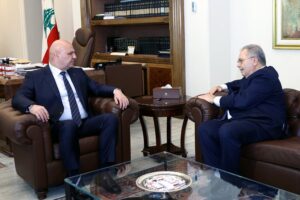
The Minister of the Environment, Dr. Tamara El-Zein, warned of serious geological and environmental repercussions resulting from the huge and successive Israeli bombings in southern Lebanon, stressing that the occurrence of some of them near major seismic faults threatens public safety and leaves near and long-term effects. She revealed that she had been assigned by the Council of Ministers to prepare a detailed report on these repercussions to submit to the UN Security Council and relevant international bodies through the Ministry of Foreign Affairs and Expatriates.
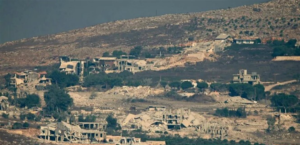
Al-Zein relied on data from the National Geophysics Center to detail the size of the explosions and their effects. She explained that the bombing of the town of Majdal Zoun, in which Israeli forces used about 80 tons of explosives, generated ground waves similar to an earthquake with a magnitude of 3.1 on the Richter scale, and caused the town to split into two halves. The bombing of the vicinity of Beaufort Castle, using about 700 tons of explosives, caused waves similar to a 3.8-magnitude earthquake, the concussions of which were felt by residents dozens of kilometers away.
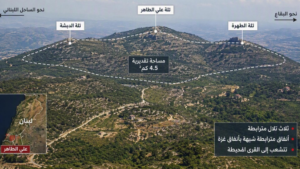
The Minister of Environment added that the Ali Al-Taher Hill bombing was considered the largest, as about 1,100 tons of explosives were used, which generated ground waves equivalent to a 4.2-magnitude earthquake, noting that this size embodies “excessive violence that exceeds the military goal.” She pointed out that this explosion occurred only one kilometer from the “Rum Fault” and about 7 kilometers from the “Yammouneh Fault,” limiting the risks to the possibility of moving existing faults or reactivating them under certain geological conditions, which may raise the possibility of seismic activity, while emphasizing the impossibility of definitively confirming the future results of these effects.
Al-Zein stressed that the impact of these bombings goes beyond the direct military framework, causing changes in geography and widespread damage to homes, infrastructure, and the natural and built environment due to the concussions. While she described these attacks as “environmental genocide,” she called on the state and the government to deal with the damage and risks in proportion to the extent of their seriousness, and not be content with documenting what it called “war crimes.”
This official move moves the file of attacks to a new path that goes beyond counting the direct damages, towards documenting the potential geological and environmental impacts and establishing them in Lebanon’s diplomatic action within international institutions.