Ali Al-Taher is not the end… What does Israel have in store for the south?
Nakhla Adimi – Call of the Nation
The recent Israeli operations in the Ali Al-Taher area are no longer an isolated field event or a limited operation linked to one location. Rather, they raise a larger question about the nature of the next phase and the limits of the goals that the Israeli army seeks to achieve, especially with regard to underground facilities and infrastructure in different areas of the south.
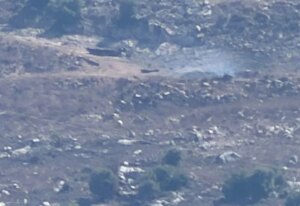
The most prominent field fact in the Ali Al-Taher area is that the Israeli army carried out a massive bombing operation in the section extending between Kafr Tibnit and Ali Al-Taher, from the Al-Khardali side, where parts of the tunnels, facilities and underground infrastructure in this axis were targeted and exploded.
However, this operation, according to field data available to “Call of the Nation,” did not include the entire area under the area’s land. The facilities located in the other direction, that is, from Ali Al-Taher towards Nabatieh Al-Fawqa and Doha Kfar Rumman, especially the parts extending into the highlands and the sites surrounding this axis, have not yet been subjected to a similar bombing operation.
This detail is essential in reading what happened.
This is because what has been targeted so far is part of a broader geographical scope, which means that the Ali Al-Taher operation cannot be viewed as a complete closure of this file from a military perspective. Rather, it may be the first stage of a broader operation that successively targets the rest of the facilities that Israel considers part of the military infrastructure in the region.
What’s next for Ali Al-Taher?
If the area between Kafr Tibnit and Ali al-Tahir on the Khardali side was bombed, the fact that other parts of the facilities towards Nabatieh and Doha Kafr Rumman have remained outside the scope of destruction so far makes them, from the Israeli perspective, potential targets for any next stage, whether through limited ground incursions or lightning operations to reach specific points, booby-trapping them, and destroying them.
In parallel, the picture appears to be more sensitive in the eastern sector, where Israeli movements in a number of axes indicate that the military activity is not limited to establishing sites or limited combing operations, but rather may be part of an effort to reach additional areas believed to include underground facilities and structures.
Information circulating in this context indicates the possibility of pressure shifting at a later stage towards Wadi Zibqin after Al-Mansouri, if the political and military conditions that allow Israel to expand its operations continue. It is feared that the goal is to carry out operations similar to what happened in Ali Al-Taher: reaching specific facilities, booby-trapping and destroying them, then withdrawing, without entering into a broad or long-term ground occupation. Here lies the danger of Ali Al-Taher’s model.
Is Israeli freedom of ground action established?
The operation may be an indication of a new style of Israeli military action in the south, based on localized and rapid incursions to reach and destroy underground targets, rather than relying exclusively on aerial or artillery bombardment. If this model succeeds without Israel facing serious political or field restrictions, it may transform from an exceptional operation into a recurring operational rule.
Then the discussion will not remain limited to Ali Al-Taher or Wadi Zeqin. In the longer term, other areas in the deep south, especially Jabal al-Rayhan and some of the highlands, forests, and areas located in the Western Bekaa, could become vulnerable to lightning operations or limited landings targeting specific locations to dispose of facilities or underground structures there.
Thus, the real question after Ali Al-Taher becomes beyond the name of the region itself. The issue is whether what took place was a limited operation that ended with the achievement of a specific field goal, or are we facing an Israeli attempt to establish a new pattern that allows it to enter Lebanese territory when it believes it has a military target, carry out booby-trapping and destruction operations, and then withdraw.
The difference between the two possibilities is extremely dangerous.
Because the problem in the second case will not be in the size of each individual operation, but rather in devoting a de facto field right to Israel to carry out ground operations inside Lebanese territory whenever it decides that there is a goal it wants to reach.
Hence, the aftermath of Ali Al-Taher will not be determined by military calculations alone, but also by the political and diplomatic path of the next stage, and the extent of the ability of the Lebanese state, international pressures, and existing arrangements to prevent exceptional operations from turning into a permanent pattern of Israeli incursions.
Therefore, the question is: “What’s next for Ali Al-Taher?” It is not only a question about the name of the next Israeli site, but also about the limits of what Israel will be allowed to do inside southern Lebanon, and about the possibility of halting this path before it becomes a new security and military reality, especially since any new date for the Lebanese-Israeli negotiations has not yet been decided.