US President Donald Trump escalated his tone towards Iran, stressing that Tehran strongly desires to reach an agreement with the United States, but he kept Washington’s position open, saying: “We do not know if we want this agreement.”
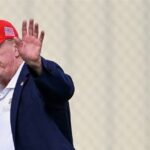
Trump’s statements came during an election rally in Myrtle Beach, South Carolina, where he devoted part of his speech to talking about the confrontation with Iran, the nuclear program, the Strait of Hormuz, and the future of negotiations between Washington and Tehran.
Trump defended the American military action against Iran, considering that it was necessary to destroy its nuclear program and prevent it from possessing a nuclear weapon. He said that Tehran’s possession and use of this weapon would have led, in his words, to “the elimination of Israel and the destruction of the Middle East.”
The US President stressed that Iran “will never possess a nuclear weapon,” in a new emphasis on the condition that he places at the heart of any possible settlement with Tehran.
On the other hand, Trump opened the door to the possibility of returning to the diplomatic track, saying that Iran “very much wants” to reach an agreement, but he added that the United States has not yet decided whether it wants to conclude it.
These statements highlight a remarkable shift in the American tone, days after Trump confirmed, on August 18, that there were no scheduled talks or negotiations with Iran, while stressing at the time the continuation of the naval blockade.
Trump also raised the issue of who Washington could negotiate with inside Iran, saying that one of the dilemmas was that he did not know who he could hold talks with, in light of what he described as the significant decline in Iranian leadership levels.
He added that Iran has become “the only country in the world that no one wants to assume its presidency,” a description that reflects his view of the extent of the pressure on which the Iranian leadership is exposed.
In the context of his talk about the results of military operations, Trump claimed that Iran no longer has naval or air forces, and that it has lost radar systems, technical equipment, and manufacturing capabilities, as part of a series of statements in which he reiterates that Iran’s military capabilities have been subjected to extensive strikes.
The US President touched on the Strait of Hormuz, saying that he is currently dealing with it as if it were “American territory,” in light of the naval blockade imposed by the United States on ships connected to Iranian ports.
Over the past few days, Trump has escalated his rhetoric regarding the Strait, and published a map describing it as a “new American territory,” while Tehran rejected these statements and affirmed its adherence to its position regarding the strategic sea lane.
Trump also linked developments in the confrontation with Iran to energy prices, expecting oil prices to fall from their current levels as soon as the United States ends what he described as the “Iran file.”
His statements come at a time when the Strait of Hormuz is still at the heart of the US-Iranian confrontation, given its sensitive location in relation to the movement of energy and global trade, in conjunction with a wide US military deployment and Washington’s continued naval blockade measures on Iran.
Between talking about Tehran’s desire for the agreement and questioning Washington’s willingness to go through with it, Trump leaves the door open to two parallel paths: continued military and economic pressure on the one hand, and the possibility of returning to negotiations on the other hand, without yet revealing the conditions that might push him to agree to a new agreement.