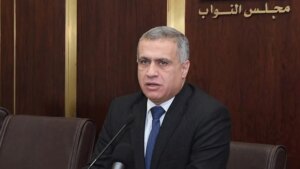
Representative Ashraf Rifi called for developing a clear and firm security plan in Tripoli and the port to pursue drug dealers and dealers and seize weapons used in recurring problems, warning that the spread of drugs and narcotic pills among young people has become a real threat to social security and the safety of citizens.
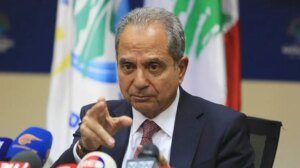
Rifi revealed, in a post on the “X” platform, that he met with the Minister of Interior and Municipalities, Ahmed Al-Hajjar, and discussed with him the security situation in Tripoli and the port, in light of what he described as recurring problems, the spread of drug abuse and promotion, and the accompanying attacks, shootings, and security incidents.
Rifi said that he asked Al-Hajjar to intensify security patrols in the two cities, and to develop a plan to pursue drug dealers, drug dealers, weapon bearers, and those causing problems, and to deal with the phenomenon from its roots after it became, in his words, threatening the city’s youth and its social security.
He stressed that the security campaign launched by the Ministry of Interior in Tripoli, whether in terms of controlling violations and motorcycles or monitoring compliance with generator pricing and other procedures, constitutes a required step, but he stressed that the priority for citizens remains the feeling of safety within the neighborhoods and the streets.
He added that achieving this goal requires reducing armed conflicts, pursuing drug trafficking networks and the people who promote them, in addition to dealing firmly with anyone who poses a direct threat to the security and safety of citizens.
According to Rifi, Al-Hajjar responded to the demands he put forward during the meeting, and emphasized working to strengthen security measures in Tripoli and the port and intensifying efforts to combat drug trafficking and its promotion, in a way that contributes to controlling security and protecting young people from this phenomenon.
The meeting also touched on the motorcycle file, which has recently turned into one of the most prominent files that the Ministry of Interior is working to organize, especially with the tightening of procedures related to violations, legal papers, and driving licenses.
Rifi revealed that Al-Hajjar informed him of the preparation of a draft law aimed at reducing motorcycle registration fees and driving license fees, allowing owners of illegal bicycles to transition more easily to legal status, in addition to learning driving conditions and becoming familiar with public safety rules.
The file of motorcycles in Tripoli is linked in more than one dimension, as they are used as a daily means of transportation for a wide segment of citizens due to their low cost compared to cars. However, the spread of unregistered bicycles, or the driving of some of them without licenses or safety equipment, has made the file the subject of increased security monitoring.
In this context, the Ministry of Interior is trying to combine law enforcement and facilitating the transition of violators to legal status, instead of keeping the procedures limited to impounding bicycles or imposing violations, which explains the proposal to reduce registration fees and driver’s licenses that Rifi revealed.
On the other hand, Rifi believes that the most urgent security problem in Tripoli and the port is not related to traffic violations alone, but rather to the spread of drugs and individual weapons and the resulting problems that sometimes develop into shootings and endanger the lives of citizens.
Over the past years, Tripoli has witnessed repeated security operations to pursue wanted persons and seize drugs and weapons, at a time when the security forces continue to carry out raids and arrests in a number of neighborhoods to combat trafficking and trafficking operations and track down people wanted by the judiciary.
Combating drugs is gaining additional importance due to the dealers targeting young age groups, while the repercussions do not stop at the health aspect, as drug use and promotion may be linked to security problems, theft crimes, assaults, or disputes that turn into the use of weapons.
Tripoli and the port also include densely populated neighborhoods and heavy commercial activity, which makes any shooting or armed conflict capable of exposing large numbers of citizens to danger, even when the dispute is limited to a limited number of people.
Rifi stressed that, from his point of view, addressing these phenomena requires a sustained state presence instead of just temporary security campaigns. The plan includes intensifying patrols, collecting information, and pursuing networks and people who provide and distribute drugs.
He concluded by stressing that Tripoli and the port do not need the citizen to take his “right into his own hands,” but rather a state that is present with the force of law and its justice, pursuing drug trafficking networks and their dealers and confronting everyone who tampers with people’s security and safety, in a way that protects youth and society from this phenomenon.