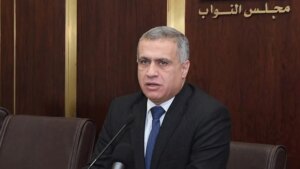
The Energy Advisory Board of the Free Patriotic Movement responded violently to the Minister of Energy and Water, Joe Seddi, against the backdrop of his positions regarding electricity production ships and the launch of a criminal audit in the file, accusing him of providing “false” information about the nature of the contracts and the cost of the energy produced, in a new escalation that moves the confrontation between the two parties from the current electrical supply file to the management of the energy sector during the past years.
The authority said, in a strongly worded statement, that Sadi “entered the ministry as a respected advisor and will emerge from it as a disrespectful liar,” before directing harsh personal and political criticism at him, accusing him of repeating incorrect information in the ship file.
The movement’s response focused mainly on two points raised by Sadi. In the nature of the contract file, the Authority rejected the description of the ships as being “rented,” considering that the Electricité du Liban was purchasing electricity from the company operating the ships as floating factories for energy production, and it was also buying or renting electricity from other sources.
The authority said that Sadi, in its words, “insists on lying to people” when he says that the cost of renting the ships over the course of 3 years exceeds the cost of purchasing them, stressing that the comparison must be based on the cost of electricity purchased by the Electricité du Liban, and not on the price of the ships themselves.
However, the description of the nature of the contract in itself constitutes a point of contention in the two novels. While the movement presented the agreement as a purchase of energy produced from floating plants, official documents from the Ministry of Finance described the contract signed in 2012 as a contract to rent ships to produce electricity, and referred to a payment of 180 billion pounds paid that year to the EDL account as part of the contract with the “CarPowership” company.
The Electricité du Liban itself had used, in a statement issued in 2013, the phrase “electric energy leasing contract” signed with the Turkish company, which reflects that the current dispute is also related to the way the contractual model is read: is it leasing floating production capacity or purchasing electricity from a company that owns and operates ships.
The second point in the authority’s response relates to the cost of a kilowatt-hour. She considered that Seddi made a mistake when he compared the cost of electricity purchased from ships to the cheapest EDL factories, stressing that the comparison, in normal circumstances, should be with the average cost of production, and in cases of severe energy shortages with the more expensive alternative sources that ships replace.
According to the Authority, the electricity purchased from ships was less expensive than the production of the old Zouk, Jiyeh, Tyre, and Baalbek factories, as well as from importing electricity from Syria, noting that the cost of energy purchased from ships was around 12 and 13 cents per kilowatt-hour at certain stages, while the average from other sources sometimes reached 17 and 18 cents depending on fuel prices and seasons.
Some of these numbers intersect with estimates published during the period of the ships’ operation. In 2017, for example, reports indicated that the cost of electricity from ships amounted to about 12 cents per kilowatt-hour, compared to about 17 cents for importing electricity from Syria and about 14 cents from some Lebanese production plants in the comparison adopted at the time. However, this cost changed with fuel prices, contract terms, and different time periods.
On the other hand, Sadi based his position on Friday on figures that he said were documented by the Electricité du Liban. He pointed out that the cost of producing ships in 2014 amounted to about 19.71 cents per kilowatt-hour, compared to 17.51 cents in Deir Ammar and 17.02 cents in Zahrani. He added that in 2015, the cost of ships amounted to about 13 cents, compared to 10.51 cents in Deir Ammar and 11.10 cents in Al-Zahrani.
Saddi also rejected the comparison made by the head of the Free Patriotic Movement, Gebran Bassil, between the cost of producing electricity from ships and the current Lebanon Electricity tariff of 27 cents for the highest portion of consumption, considering that the tariff paid by the subscriber includes additional elements related to production, transportation, distribution, and waste, and is not just the cost of production.
The explosion of controversy coincided with Saddi’s announcement, on August 21, of the launch of the tender process for forensic auditing of electricity generation ship deals between 2012 and 2017 and the related fuel deals, after publishing the book of conditions on the Public Procurement Authority platform.
Sadi had placed the file on the Cabinet’s table months ago, announcing on April 23 that he had presented the forensic audit conditions booklet that had been prepared in cooperation with the Public Procurement Authority, considering the step an implementation of the ministerial statement and the government’s pledge to conduct forensic and accounting audits in ministries and public institutions.
The audit process passed through several stages, as the Public Procurement Authority took note of the content of the book of conditions on March 16, and demanded that it include at least ship deals for the years 2012-2017 and related fuel deals, before the Council of Ministers approved on April 23 to secure the accreditation, then issued on July 27 a decree transferring the accreditation, leading to the Cabinet’s approval on August 13 of the international arbitration clause contained in the book of conditions and launching the tender on August 21.
In its response, the movement affirmed that it was not afraid of criminal scrutiny, and attacked Saddi’s use of it in political debate, considering that the process would not reveal irregularities in the files managed by the movement’s ministers, and challenging the minister to present more details and numbers to public opinion.
This is not the first confrontation between the two parties over the audit, as Representative Cesar Abi Khalil previously responded to the suggestion of a criminal audit in other files of the Ministry of Energy, including the Jinnah Dam, considering that previous files were subject to investigations and reviews without, according to his position, proving the political accusations that were raised about them.
The ship file is one of the most divisive files in the modern history of Lebanese electricity. In 2012, Lebanon contracted with the Turkish company “Karpowership” to send two ships to produce electricity, and operation began in 2013, before the contracts were later extended and the ships continued in Lebanon for about 9 years. The company says that it has, in some stages, provided about 25% of the Lebanese demand for electricity.
Since the beginning of the project, opinions were divided between those who saw the ships as a quick solution to compensate for the lack of production and provide energy at a lower cost than some old factories and private generators, and those who considered that the money spent on them could have been invested in building permanent factories that would provide a long-term solution instead of adopting a temporary option for years.
Later reports estimated that purchasing electricity from ships cost Lebanon more than $1.5 billion over the years of operation, without taking into account the full value of the fuel provided by the Lebanese state. These numbers were among the reasons that prompted continued demands to scrutinize the financial feasibility of the project and the conditions for extending contracts.
On the other hand, the movement maintains that evaluating the file cannot be done by collecting the money paid and comparing it to the price of establishing a factory only. Rather, the amount of electricity produced, the cost of the alternatives that were available at each stage, the additional feeding hours provided by the ships, and the cost that the citizen would have borne through private generators in their absence must be calculated.
Bassil had finally returned to defending this proposal, considering that the cost of purchasing electricity from ships was between 11 and 15 cents according to fuel prices, and that adding feeding hours from this source would have allowed the Electricité du Liban to achieve additional revenues instead of leaving citizens facing a higher cost for generators.
Thus, the “It Will Echo” campaign, which the movement began by attacking the current minister’s administration of the electricity sector, turned into a direct confrontation over the legacy of the Ministry of Energy itself, while the expected forensic audit has become a candidate to be the reference that both parties turn to in one of the most sensitive financial and political files.
Until the results of the audit appear, the numbers and descriptions remain a subject of dispute between Sadiq and the Movement: The Minister says that the ships were more expensive than the most prominent production plants and that the audit will reveal how the money was spent, while the Movement responds that the energy purchased from them was more abundant than several alternative sources and that the comparison adopted by the Minister is economically unsound.
Thus, the confrontation is no longer only related to the future of electricity in Lebanon, but rather has turned into a battle over the narrative of the past itself: who bears responsibility for the choices that were made? Did the ships save the state and citizens, or did they accumulate costs that could have been avoided? These are questions that the new forensic audit tender is supposed to provide documented data to answer, away from political debate.