A new discrepancy within the US administration revealed a conflict in the prioritization of the war with Iran, between keeping energy prices low and ensuring market stability on the one hand, and preventing Tehran from possessing a nuclear weapon on the other hand, at a time when internal pressures are increasing on US President Donald Trump due to rising fuel prices and inflation.
White House spokeswoman Carolyn Levitt told reporters accompanying Trump on Air Force One that the goals of keeping fuel prices low and preventing Iran from possessing a nuclear weapon are equally important to the US president.
Levitt stressed that Trump will go to the end, no matter what, to achieve both goals, namely maintaining fuel prices that the American consumer can afford, and preventing Iran from reaching nuclear weapons.
Levitt’s words came after statements by US Vice President J.D. Vance, in which he placed the energy file ahead of the nuclear file, as he stressed that the administration is currently focusing on ensuring the continuity of energy supplies to the global economy and maintaining the stability of oil and gas prices.
Vance explained that the administration’s first goal at the current stage is to increase the flow of oil and gas through the Strait of Hormuz and ensure the stability of energy markets, allowing prices to remain at levels that the American consumer can afford, with preventing Iran from possessing a nuclear weapon coming in second place.
Vance also noted that the situation with Tehran remains “volatile,” stressing that Washington possesses a set of diplomatic, military, and economic tools to pressure Iran and push it to take practical steps.
Vance and Levitt’s statements showed a clear difference in the way priorities were presented within the administration, especially since the White House was quick to stress that the energy and nuclear files were of equal importance, in an attempt to dispel the impression that the administration had rearranged its goals in the war.
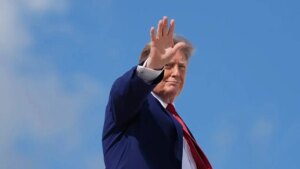
But the controversy expanded further a few hours later, when Trump himself returned to confirm that preventing Iran from possessing a nuclear weapon took precedence over the economic burdens borne by the Americans.
Trump said during an event in Nassau County, New York, that he “will never apologize” for taking military action against Iran, considering that high gasoline prices constitute a price that can be borne in exchange for preventing Tehran from possessing a nuclear weapon.
He added, addressing the Americans who pay higher fuel prices, that they must remember that this additional cost comes, as he put it, within the framework of preventing Iran from obtaining nuclear weapons.
This position does not represent a complete change in Trump’s speech, as he previously confirmed last May, when asked about the impact of negotiations with Iran on the financial situation of Americans, that his only priority is to prevent Tehran from possessing a nuclear weapon.
He said at the time that he did not think about the financial situation of the Americans or any other considerations to the same extent, stressing that the nuclear file was the primary issue for his administration.
When asked again about the economic impact of the war, Trump reiterated that preventing Iran from obtaining a nuclear weapon was the most important matter “by far,” even in light of the volatility witnessed in the markets.
The controversy within Washington comes at a time when the war with Iran has become directly linked to the cost of living in the United States, after military developments and the closure of the Strait of Hormuz led to widespread turmoil in energy markets.
About 20% of the world’s oil supplies pass through the Strait of Hormuz daily, making any disruption to shipping traffic through it capable of causing rapid jumps in crude and fuel prices and transportation and shipping costs.
According to American media, the average price of regular gasoline in the United States rose to about $4.50 per gallon, while the price of diesel reached about $5.64, which increased pressure on consumers and on the US administration at the same time.
Inflation also rose in April to 3.8%, the highest level recorded in about 3 years, while data from the Bureau of Labor Statistics indicated that energy costs accounted for more than 40% of the monthly increase in the price index.
These numbers gain special political importance as the midterm elections approach, as Democrats are trying to link the war with Iran to the rise in fuel prices and the cost of living, while the White House seeks to justify these repercussions as part of the cost of preventing Iran from possessing a nuclear weapon.
The differing statements within the administration also reveal a fundamental dilemma facing Washington: continued military and naval pressure on Iran may raise the cost of energy and increase pressure on the American interior, while lowering prices requires the restoration of the flow of oil and gas more regularly through the Strait of Hormuz.