Iran is entering a more stringent economic phase in the face of sanctions and the US naval blockade, through what has become described as a “survival economy,” as Tehran adopts a series of measures that include rationing goods that are in shortage, restricting access to foreign currencies, reducing investments, and implementing programmed power outages, in an attempt to increase its ability to withstand the economic pressure exerted by the administration of US President Donald Trump.
According to a report by journalist Tomer Almog on the Israeli “N12” website, the Iranian regime is taking a series of steps to confront the US blockade and sanctions, amid estimates that these measures will further weaken the Iranian economy, but at the same time they may give the regime a longer ability to withstand.
The report indicated that senior officials in the Iranian regime expressed unusual concern about the economic situation, while US mediators warned that Iran is not expected to collapse as a result of economic pressure alone.
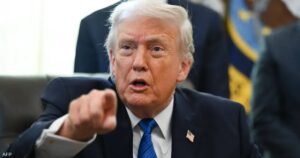
Trump made it clear this week that he is betting that the economic pressure on Iran, including harsh sanctions and a naval blockade, will push it to the breaking point. However, Tehran, which has accumulated long experience in dealing with sanctions and economic pressures, is working in return to build a “survival economy” that allows it to continue for as long as possible.
The Wall Street Journal reported that Tehran began rationing goods that are in short supply, restricting access to foreign currencies, reducing investments, and placing a greater share of the economic burden on families, in parallel with protecting strategic imports and vital state mechanisms.
It is expected, according to the report, that these measures will deepen poverty and further harm the already faltering Iranian economy, but they may give the regime the ability to withstand for a longer period, in parallel with causing economic damage to Trump and the global economy.
Iran has already begun implementing programmed power outages, in addition to limiting the activity of a number of factories.
The government also adopted a highly subsidized foreign exchange rate for imports, including basic products such as wheat, medicines, and infant formula substitutes, in a move that gives priority to these goods at the expense of other uses of scarce foreign currencies.
In contrast, Iranian families are making special adjustments to their consumption patterns.
Iranians told the Wall Street Journal that they are now limiting their spending to basic needs such as food, fuel, and medicine, abandoning meat in their meals and reducing the purchase of basic goods, at a time when their salaries are constantly losing value.
According to the report, the Iranian plan aims to thwart Trump’s bet that economic pressure will force Tehran to break before Washington.
The American newspaper reported that the mediators warned the United States that Iran has been living under sanctions for years, and that betting on Tehran making concessions as a result of economic pressure may not lead to the desired results.
On Sunday, Trump told N12 correspondent Barak Ravid that he was betting that the economic pressure imposed on Iran would lead to the desired result.
“We’re just watching what’s happening in Iran, with the massive inflation there and the fact that they don’t have the money,” Trump said.
He added: “They have no money to pay their soldiers’ salaries. Our naval blockade is very effective.”
The report indicates that the US naval blockade on Iran, which resumed about a month ago, led to paralysis in the Iranian oil sector and imposed a huge cost on the economy.
The Financial Times reported at the weekend that the naval blockade led to an almost complete halt in Iranian oil sales.
Satellite images analyzed by the newspaper showed that during an entire week, no oil tanker loading was recorded on Kharg Island, which is the main export center for Iranian oil and through which about 90% of the country’s total oil exports pass.
The images also showed that Tehran began reducing oil production in its fields with the aim of preventing a shortage of storage space.
Due to the decline in revenues, the Iranian regime is facing difficulties in paying the salaries of members of its security forces, according to what was reported by “Iran International”.
The economic crisis extended to tens of millions of Iranians.
The International Monetary Fund expects the Iranian economy to contract by 6% in 2026, while the annual inflation rate is about 80%.
The prices of poultry and milk also rose by more than 150%, and about half a million Iranians lost their jobs, while a larger number faces shortages of fuel and other goods as a result of the war.
In parallel, senior Iranian officials began to speak publicly about the seriousness of the economic situation, which led to a rare public disagreement within the top of the regime.
The Wall Street Journal reported that Iranian President Masoud Pezeshkian said last month that the Iranian economy has become the country’s main battlefield after the military strikes.
Pezeshkian warned that escalating economic pressure could lead to increased popular discontent.
He also threatened to resign, and Mojtaba Khamenei warned during a direct meeting that the Iranian economic situation was dangerous.
In another development, the governor of the Central Bank of Iran wrote a letter to Supreme Leader Mojtaba Khamenei, warning that the country is facing a severe budget crisis, and that stocks of food and basic medical supplies may run out by the end of August if the naval blockade continues, according to what was revealed by the New York Times.
In turn, Kazem Gharibabadi, Iranian Deputy Foreign Minister and a senior official in the negotiating team, told the “IRIB” network that the economy is in dire need of sanctions relief, which may be achieved within the framework of a diplomatic agreement.
He added: “When I read some of the objections to the negotiations, I really wonder what world these people live in.”
Despite public and unprecedented statements about the difficult economic situation, hard-line parties within the Iranian regime still hold the bulk of the power and influence.
The report concluded that the United States’ ability to make Iran poorer does not necessarily mean that this will lead to its collapse or to force it to surrender to the demands of the White House, which makes the battle of the “survival economy” an essential part of the open confrontation between Washington and Tehran.