The Ministries of Environment and Agriculture resolved the escalating controversy over expired chemicals belonging to the Electricité du Liban, stressing that the materials subject to treatment, primarily trisodium phosphate, are neither explosive nor radioactive, but on the other hand, they cannot be used randomly or distributed on agricultural lands without adhering to the approved scientific and legal conditions.
In a joint statement, the two ministries explained that the materials subject to the proposed treatment, according to their safety data, are non-explosive and non-radioactive chemicals, and therefore do not cause panic. However, dealing with, transporting and processing them must be carried out in accordance with scientific and legal principles and under the supervision of the competent authorities, in a way that ensures the protection of the environment and the safety of agricultural production.
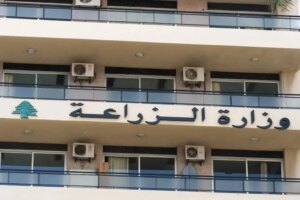
They pointed out that the Ministry of Environment is responsible, within its powers, for determining the environmental conditions and standards that must be adopted to treat expired materials or dispose of them in a proper manner, while the Ministry of Agriculture is responsible for evaluating the suitability of any material proposed for use in agricultural lands in accordance with its approved technical and laboratory standards.
After studying the proposed solution for treating trisodium phosphate, which is based on dissolving the substance in an amount of water at a specific temperature and then adding an amount of lime or calcium hydroxide, the Ministry of Agriculture concluded that this option is not suitable for agricultural use.
The Ministry explained that the material contains a high percentage of sodium, amounting to about 40%, while the percentage of sodium in any material used as fertilizer should not exceed 3%, especially since most Lebanese agricultural lands are of a calcareous-alkaline nature.
She pointed out that the mechanism for registering agricultural fertilizers and licensing their use is not compatible with the proposed solution, as the registration and use of any fertilizer is subject to specific technical, laboratory and administrative standards that guarantee its safety and suitability for soil and crops.
Accordingly, the Ministry of Agriculture announced that it does not approve of using this material as fertilizer or distributing it on agricultural lands, in order to preserve the safety of soil, water, and agricultural production.
In return, the Ministry of Environment requested the Electricité du Liban, as the owner of the materials and legally and technically responsible for their management, to immediately retrieve the remaining quantities to its warehouses and store them in an environmentally sound manner, and to take the necessary measures to prevent any leakage or additional use of them.
She also stressed the need to wait for the contracting company to present an alternative and safe scientific methodology for processing materials, provided that this methodology is subject to evaluation by the competent authorities and obtaining their prior approval.
The two ministries stressed that if it is not possible to adopt an environmentally sound method to treat these materials inside Lebanon, they must be transported to a country where qualified facilities and technologies are available to treat and dispose of them safely, in accordance with the provisions of the Basel Convention and applicable laws.
They concluded by stressing the continuation of coordination and joint follow-up of this file with all transparency and responsibility, and taking the necessary measures to protect the environment, soil, water and agricultural production, calling for obtaining information from scientific and official sources and avoiding raising concerns through inaccurate comparisons or descriptions.
The joint statement resets the course of the file after the controversy that arose over the method of treating expired materials belonging to Electricité du Liban, as it has become clear that the agricultural option is rejected according to the approved standards, while the next steps are limited to finding an alternative and safe treatment inside Lebanon or transferring the materials to specialized facilities outside the country if that is not possible.