In a preliminary Israeli analysis of the positions of US President Donald Trump regarding the ceasefire with Lebanon, it appears that the truce does not mean a complete cessation of military operations, but rather a field reorganization that allows the Israeli army to continue its operations inside Lebanese territory within new restrictions.
According to a report by journalist Nir Dvory on the Hebrew Channel 12, Israel interprets Trump’s statements, who called for a halt to the attacks, as restricting strikes deep into Lebanon, while preserving freedom of military action in areas near the border, where the Israeli army is still deployed in advanced locations and continues what it calls “removing threats.”
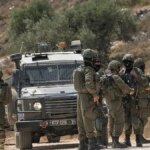
Based on this interpretation, clear instructions were issued to the Israeli forces on the ground that “anything that poses a threat to the forces or the residents of the north can be targeted,” which was embodied in practice, according to the report, by the killing of an element in southern Lebanon who was riding a motorcycle while heading to carry out an operation.
On the other hand, Lebanese citizens are not allowed to return to areas controlled by the Israeli army, indicating continued field control despite the ceasefire declaration.
As stated in the report, Israel seeks to establish a joint monitoring mechanism with the United States, while insisting on maintaining complete freedom of military action throughout Lebanon, in anticipation of any possible breach or escalation. The Israeli army also presented to the government a plan to resume fighting if the political track fails.
Minutes before the ceasefire entered into force, the Israeli army carried out a special operation during which a force from an elite unit was landed in the “Kristofani Ridge” area, an Israeli name that is not common locally, where the force took control of the site with the aim of strengthening field influence in the calculations of future negotiations. The operation was carried out under the supervision of Chief of Staff Eyal Zamir, in addition to the Commander of the Air Force and the Commander of the Northern Region.
On the political level, Israeli Prime Minister Benjamin Netanyahu announced that his country had agreed to a “temporary ceasefire” at Trump’s request, with the aim of paving the way for a political and security settlement with the Lebanese government, considering that Israel had achieved “major achievements” on the northern front.
On the other hand, Trump stressed his position of rejecting the continuation of the bombing, saying: “The United States prevents Israel from attacking Lebanon. Enough means enough,” which indicates the extent of American pressure to consolidate the truce.
In short, it appears from this analysis that the ceasefire does not mean the end of military operations, but rather their transformation into new rules of engagement, as Israel is trying to establish an equation that combines political calm with the continued imposition of field realities, in a way that keeps southern Lebanon under constant tension despite the announcement of the truce.