November 20, 2026

The White House witnessed a sudden change in leadership of the cybersecurity file with the departure of National Director Sean Cairncross from his position, at a very sensitive time when concerns are increasing about the ability of American institutions to confront advanced digital threats and the expanding use of artificial intelligence in cyberattacks.
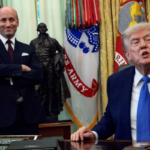
American press reports stated that White House Chief of Staff Stephen Miller played a direct role in pushing for the exclusion of Cairncross with the support of President Donald Trump, following reservations related to his specialized experience, and this was among Miller’s first files after assuming his new position, at a time in which other accounts were also referred to talking about an amicable exit that would allow the administration to prepare to appoint a successor to him before control of the Senate is transferred to the Democrats next January.
Following this deportation, Secretary of State Marco Rubio announced the selection of Kirsten Davis, the former chief information officer at the US Department of Defense, to temporarily take over the management of the National Cybersecurity Office, congratulating her and expressing his aspiration to strengthen American cybersecurity, while praising her long experience in the fields of technology and cybersecurity and her leadership defenses.
This administrative change coincided with a series of widespread technical failures that struck government institutions and vital sectors in the United States, including Microsoft Outlook email, Federal Aviation Administration systems, and National Security Agency networks, in addition to banking services. Although American officials sought to reassure citizens and confirm that there was no evidence of a coordinated cyber attack, the coincidence of the two events reopened the debate about the readiness of federal infrastructure.
The challenges were not limited to technical malfunctions, as Cairncross had previously faced disagreements with Trump administration officials and representatives of technology companies regarding oversight of advanced artificial intelligence models for companies such as “OpenAI” and “Anthropic,” especially after he led the government response to the risks of the “Mythos” model and supervised the implementation of an executive order that gave the government a broader ability to examine models before launching them, in coordination with the Director of National Intelligence, Jay Clayton, and the National Security Advisor and Secretary of State, Marco Rubio.
These developments came at a time when the administration faced pressures related to a controversy raised by Jensen Huang, the former CEO of Nvidia, against the backdrop of his relationship with a woman suspected of being linked to Chinese intelligence and facing charges of smuggling advanced electronic chips, without published evidence proving Huang’s involvement in espionage activity.
It is noteworthy that Cairncross was asked during his confirmation hearings in the Senate regarding his specialized technical experience, given his prominent Republican political background as a former advisor in Trump’s first term, while the administration pins hopes on his background as Davis, who has previously approved and is known for her extensive technical experience, to enhance the efficiency of the National Cybersecurity Office in facing an extremely complex and sensitive phase at the level of national security.