November 20, 2026

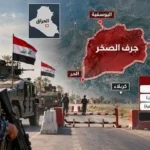
The Iraqi “Jurf al-Sakhr” region, one of the most sensitive and complex security and political issues in the country, is entering a pivotal stage to redraw the map of influence and power, with the Energy Police beginning to assume responsibility for direct supervision of oil pipelines, and completing preparations for the redeployment of government forces. This decisive step, which was announced today, Friday, comes after days fraught with tension against the backdrop of accusations of oil smuggling, and mounting pressure to reorganize the armed presence in this strategic spot located north of Babil Governorate.
These field movements fall within the framework of implementing the decision of Iraqi Prime Minister Ali al-Zaidi to redistribute security responsibilities in the region, by forming a controlling headquarters affiliated with the Federal Police Command and including joint units of the army, police, Popular Mobilization Forces, and energy police. Under the new plan, the army, federal police, and Popular Mobilization Forces formations share responsibility for specific security sectors, while the Energy Police is solely tasked with protecting oil transportation lines, in parallel with arrangements to open main roads to traffic. During a press conference devoted to presenting the details of the deployment, the security forces stressed the existence of close cooperation with the Popular Mobilization Forces to enhance official supervision, while the commander of the controlling headquarters announced the complete readiness for work, amid revealing government plans to launch projects whose nature or dates have not yet been determined.
These arrangements acquire exceptional dimensions given the spark of tension that preceded them. The Iraqi government had announced monitoring violations and tampering with pipelines and suspicions of oil smuggling, which prompted it to refer investigations to the judiciary and issue firm directives to strengthen the presence of official institutions. In a remarkable move, Baghdad set a deadline for members of the Hezbollah Brigades to leave the region where the group has enjoyed wide influence for years, at a time when the Brigades were quick to deny all accusations against them regarding oil smuggling.
Since regaining control of it from ISIS in 2014, Jurf al-Sakhar has remained subject to strict security arrangements that prevented a large number of its displaced residents from returning to their homes, which turned its file into a humanitarian and political complex that goes beyond the military dimension. With the start of the new deployment and the energy police taking the initiative, the Iraqi government today stands before a decisive test of its ability to impose its authority and implement its decisions on the ground, amid widespread anticipation of the repercussions of this new equation on the map of influence of the armed factions in Iraq.