November 15, 2026

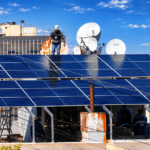
The solar energy sector in Lebanon has witnessed a remarkable boom in recent years, driven by the severe electricity crisis that prompted thousands of citizens and institutions to rely on solar panels to secure their basic energy needs.
According to statistics from the International Renewable Energy Agency (IRENA) for the year 2026, the installed capacity of solar energy in Lebanon increased from about 92 megawatts in 2020 to reach about 1,505 megawatts by the end of 2025, recording a tremendous growth of more than 16-fold in five years.
On the Arab level, Lebanon is among the list of relatively advanced countries in terms of installed solar capacity without occupying the lead, as it is ahead of several Arab countries, but it still lags behind Saudi Arabia, whose solar capacity reached about 11,882 megawatts, the UAE with about 6,716 megawatts, Egypt with about 3,247 megawatts, Jordan with about 2,195 megawatts, in addition to Oman and Qatar.
In the same context, a report issued by Century International in May 2026 showed that Lebanon includes more than 250,000 solar energy systems, covering between 20 and 25% of Lebanese families, based on estimates by the National Council for Scientific Research.
The Lebanese experience is distinguished by the fact that this expansion was achieved almost entirely through individual initiatives and private financing, in clear contrast to the experiences of other Arab countries that relied on government investments and huge strategic projects.
Despite this wide spread, major solar energy projects in Lebanon still suffer from financial and regulatory obstacles that have hindered their progress. Reports published in August 2026 revealed that projects with a total capacity of 165 megawatts, for which official licenses were granted in 2022, have not yet entered the operating phase.
The 2026 numbers reflect a paradox: Lebanon has achieved exceptional success in relying on solar energy amid the collapse of the official electricity sector and beyond, which places the sector before the fundamental challenge of transforming this random individual effort into a sustainable national system that supports the electricity network and limits costly dependence on private generators.