November 2, 2026

Four participants completed a mission that lasted 378 days, after leaving their residence at NASA’s Johnson Space Center in Houston, after spending more than a year in complete isolation in an experience that simulates life conditions on the planet Mars.
This experiment is part of NASA’s preparations for future Mars exploration missions, and aims to study the human ability to adapt to the conditions of living and working for long periods away from planet Earth.
Ellen Ellis, the medical officer in the mission to simulate crew health and performance, explained that the experience was arduous on both the psychological and physical levels, noting that the crew members lived an entire year in voluntary isolation, amid conditions that simulate the challenges that astronauts may face during a real trip to the Red Planet.
On October 19, 2025, the four participants entered a residential facility with an area of 158 square meters, which was created using 3D printing technology. The crew underwent a daily program that included growing crops in soil that simulated the Martian environment, carrying out scientific missions, and communicating with NASA teams through systems that simulate time delays in interplanetary communications.
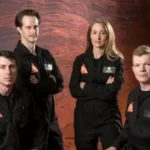
In addition to Ellis, the crew included mission commander Ross Elder, science officer Matthew Montgomery, and flight engineer James Spicer.
Commenting on the conclusion of the mission, Elder stressed that sending humans to Mars represents a great challenge, but he considered that achieving this goal is possible and inevitable, in light of the availability of knowledge, leadership, creativity, and continuous work.
NASA seeks to send the first human mission to Mars during the 2030s, in parallel with its plans to return astronauts to the surface of the moon for the first time since 1972.
During the next two weeks, the crew members are scheduled to undergo a series of assessments and conclusion sessions in cooperation with agency scientists, with the aim of analyzing the repercussions of long-term isolation on their mental and physical health, and the extent of their ability to maintain productivity, communication, and teamwork.
NASA hopes that the results of this experiment will provide vital data that will help understand the daily requirements of long-term spaceflights, and develop the necessary means to ensure the safety and efficiency of astronauts during future exploration missions outside Earth.