October 30, 2026

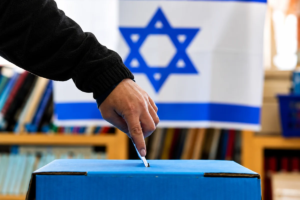
At dawn on Friday, Israel officially entered the stage of negotiations to form the government, following the Central Elections Commission’s announcement of the final results of the Knesset elections, which produced a political map identical to that produced by the initial counting processes, without fundamental changes in the balance of the camps.
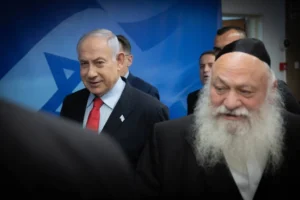
The results showed that the Likud Party, led by Benjamin Netanyahu, topped the list with 27 seats, followed by the Yashar Party, led by Gadi Eisenkot, with 21 seats, which heralds complex and painstaking coalition negotiations to reach the majority required to form the next government.
In an advanced position, the “Together” party came third, winning 12 seats, ahead of the “Joint List,” which won 11 seats, while the “Unified Arab List” and the “Democrats” party won 8 seats each.
As for the rest of the forces, the “United Torah Judaism,” “Israel Our Home,” and “Otzma Yehudit” parties each won 7 seats, while the “Shas” and “Religious Zionism” parties each won 6 seats.
These data establish an extremely complex parliamentary scene, as the formation of the government now depends on the ability of either camp to attract new allies in order to reach the threshold of 61 seats, which is the legal quorum for the majority within the Knesset, which consists of 120 seats.
This map places the medium and small parties, especially the Arab lists and the blocs whose allegiances are unresolved, in a pivotal position and a decisive axis for determining the identity of the next prime minister.
With Netanyahu striving to consolidate the foundations of his camp, and in parallel with the movements of his opponents aimed at weaving an alternative coalition, the most complex stage of the electoral process has officially begun, governed by careful political calculations, bargaining, and the exchange of conditions in a fierce race to reach the number 61.