October 29, 2026

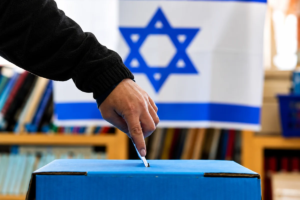
The political map in Israel is heading towards an unprecedented earthquake that may destroy the hopes of Prime Minister Benjamin Netanyahu, with the emergence of powerful voices within the ultra-Orthodox United Torah Judaism party proposing a scenario of supporting a minority government led by Gadi Eisenkot from outside the coalition. This complex political maneuver gives the Change camp led by Eisenkot a decisive numerical advantage of 48 votes compared to 46 for Netanyahu’s camp. This formula is based on United Torah Judaism remaining outside the official government formation, with a commitment to refrain from voting against it or obstructing its crucial legislation, which provides Eisenkot with a parliamentary safety net supported by the eight votes of the “Ra’am” party whenever he needs them to pass his decisions.
This dramatic move stems from a firm conviction crystallized by the Haredi leaders that the political validity of their traditional alliance with Netanyahu has expired, especially after his repeated inability to secure a comfortable 61-seat majority. These leaders are deeply afraid of sliding into the barren “opposition desert” in the event that a national unity government is formed that excludes them from the scene, which prompted prominent figures in the sect to declare the end of the era of absolute loyalty to the Likud leader. This rebellious approach is consistent with previous directives of the Lithuanian spiritual leader, Rabbi Dov Landau, who publicly withdrew confidence from Netanyahu, directing the compass of his sect towards making purely pragmatic decisions that serve its vital interests, away from blind political alliances.
Despite this tactical rapprochement, the Haredi recruitment file stands in the way of these historical understandings as a very complex minefield, as the religious party realizes that Eisenkot and his partners, with their military backgrounds, will not grant him the comprehensive exemption he aspires to. However, the architects of this rapprochement are betting on a calm dialogue behind the scenes that will lead to the passage of a conscription law that will save Eisenkot’s face before his voters, and at the same time remain coexistable and applicable from the Haredi perspective, provided that the representatives of the religious party are content to oppose the legislation publicly without resorting to the bone-breaking option. In addition to this sensitive file, United Torah Judaism places the protection of the huge budgets allocated to its yeshivot religious schools and private institutes as a fundamental condition for any future political arrangement, with the possibility of actually joining the government later when the conscription law is passed.
With current contacts limited to low levels between the Change camp and the Haredi party, amid deafening silence from the Yashar Party, the Israeli political arena is anticipating the transition of these exploratory dialogues into serious and intense negotiations in the coming days. If this political engineering succeeds in overcoming the obstacle of recruitment and meeting the budget conditions, it will not only lift the religious parties out of opposition isolation, but will also mark the actual end of the Netanyahu era, opening the doors of power for General Eisenkot to lead Israel in one of its most delicate political and security stages.