October 29, 2026

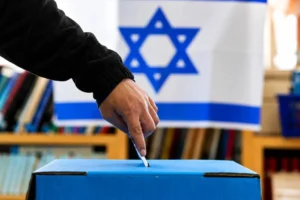
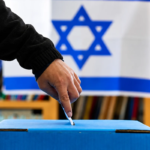
Israel is heading toward a complex political crisis after the latest results of the legislative election count, published by Yedioth Ahronoth newspaper on Thursday, October 29, showed the continued inability of Prime Minister Benjamin Netanyahu’s camp to reach the majority necessary to form a government, in contrast to unprecedented progress by the Arab parties, which now have an influential parliamentary bloc in the calculations of the next stage. The counting of 98.6% of the regular polling stations was completed, with about 91.7% of the total votes counted in the stage covered by the update, while the counting of the double envelopes, which include the votes of the military and other categories, continued.
Interim results showed that Netanyahu’s camp won 53 seats, compared to 48 seats for the Change camp led by Gadi Eisenkot, while the two Arab lists won 19 seats out of 120 in the Knesset. These numbers mean that Netanyahu still needs eight additional seats to reach the majority threshold of 61 seats, while Eisenkot’s camp needs 13 additional seats. On the other hand, the Arab parties, if a political understanding is reached with the change camp, can play a decisive role in defining the identity of the government or in providing parliamentary support for it.
The detailed seat map shows that Netanyahu’s Likud Party won 26 seats, compared to 21 seats for the Yashar Party! Led by Eisenkot, 12 seats for the “Together” coalition, and 11 seats for the Joint Arab List. The Democratic Party won eight seats, and the United Arab List “Raam” also won eight seats, led by Mansour Abbas, while the Yisrael Beytenu, United Torah Judaism, Shas, and Jewish Forces parties won seven seats each, compared to six seats for the Religious Zionism and “Zehut” coalition. Thus, Netanyahu’s camp is divided between Likud with 26 seats, Shas with seven, United Torah Judaism with seven, the Jewish Force with seven, and Religious Zionism with six (53 seats), while the Change camp includes Eisenkot’s party with 21 seats, the “Together” coalition with 12, the Democrats with eight, and Yisrael Our Home with seven (48 seats). The share of the two Arab lists rose to 19 seats thanks to the high participation. In Arab towns.
These numbers are still provisional because the completion of the double-envelope count may lead to additional adjustments in the distribution of seats, especially between parties close in number of votes. These envelopes are of particular importance because they include the voices of soldiers, members of the security services, and voters in hospitals, prisons, and diplomatic missions. According to Yedioth Ahronoth data, Likud led in a sample of these envelopes by 18.5%, while the importance of these votes also stands out for the lists that did not exceed the 3.25% electoral threshold, such as the Reserve Party and the Economists, as the movement of any small party into the Knesset may redistribute the seats.
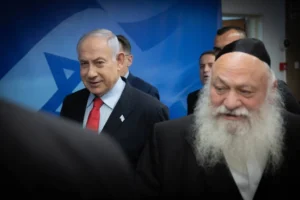
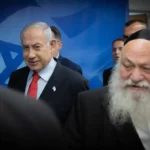
In parallel with the sorting, political contacts began between the different camps amid the absence of a clear path to forming the government. Netanyahu made contact with his allies, Itamar Ben Gvir and Bezalel Smotrich, amid the Haredi parties’ fear of a national unity government that would exclude them. On the other side, the Eisenkot camp began exploring the possibility of agreeing on joint parliamentary steps, including replacing Knesset Speaker Amir Ohana, a step that requires cooperation with Arab representatives. The political complex lies in the refusal of a number of parties to participate in a government that relies on Arab lists, as the head of the Yisrael Beytenu party, Avigdor Lieberman, renewed his refusal to join a government headed by Netanyahu or to participate in an arrangement that relies on the joint Arab list.
The scene became more complicated and the Shin Bet opened an investigation into suspicions of foreign interference in the electoral process and accusations of financing activity within the Arab community that have not yet been proven. Likud was quick to use the investigation to challenge the legitimacy of any government cooperation with Arab parties, while Eisenkot warned against exploiting the file to disrupt the constitutional process. Israel faces an unusual equation: Netanyahu’s camp has the largest bloc between the two camps without a majority, and Eisenkot’s camp can mathematically exceed the threshold of 61 seats with sufficient Arab support, but it faces political differences.
If it is not possible to reach a coalition that enjoys the confidence of the Knesset, Israel may enter a long phase of negotiations and attempts to form a government, with the possibility of returning to new elections remaining. This crisis is reflected in security and regional files, including the possible war with Iran and the Lebanese front, as the negotiations coincide with military preparations and escalating tensions, noting that the continuation of the crisis does not necessarily mean stopping Israeli military decisions or changing policy towards Lebanon before official positions are issued. Pending the completion of the count and the final results, the most prominent political fact remains that the elections did not give Netanyahu a sufficient mandate to form a government alone, nor did they give his opponents a guaranteed majority, while the nineteen Arab seats turned into one of the most prominent keys to the balance within the new Knesset.